Driven by fast‑moving advances in artificial intelligence (AI) and a rapidly shifting geopolitical landscape, cyber risks are escalating around the world. According to the World Economic Forum’s Global Cybersecurity Outlook 2026 published in collaboration with Accenture, 87% of global leaders reported rising AI‑related vulnerabilities, and 94% expect AI to be the biggest force shaping cybersecurity in 2026.
Jacky Fox, Global Lead, Security Strategy Practice, Accenture, leading cybersecurity across Asia Pacific, and one of the contributors to this report said: “Globally we’re seeing cyber fraud escalate and AI heighten exposure in ways that challenge even the most prepared organizations. Across the Asia Pacific region, the impact is sharp, as rapid technological adoption confronts a complex threat landscape. Organizations must now strengthen oversight of AI systems, work more closely across sectors to address fast evolving risks, and invest in the skills and capabilities needed to reduce widening resilience gaps. Building collective resilience is no longer optional — it is essential to ensuring trust and stability in a more interconnected and unpredictable digital world.”
These pressures are also highly evident across the Asia Pacific (APAC) region. This year’s findings show a clear shift: against the weaponization of AI, persistent geopolitical friction and systemic supply chain risks, and increasingly focused on securing AI systems.
KEY FINDINGS IN APAC:
AI is accelerating cybersecurity risks at unprecedented speed
- 83% of APAC organizations experienced rising AI related vulnerabilities in 2025, the fastest growing category of cyber risk.
- 93% of APAC leaders expect AI to be the most consequential force shaping cybersecurity in 2026.
- Data leaks linked to generative AI (41%) and advancing adversarial capabilities (26%) are among the top concerns heading into 2026.
- 93% of APAC leaders expect AI to be the most consequential force shaping the future of cybersecurity. This has prompted a major industry shift, with organizations significantly increasing their vetting of AI tools from 48% in 2025 to 70% in 2026, indicating that more organizations are now prioritizing official safety standards and responsible management over rapid adoption.
Geopolitics is redefining the regional cyber threat landscape
- 65% of APAC organizations now factor geopolitically motivated attacks into their cyber risk strategies.
Cyber-enabled fraud has become a pervasive regional threat
- 66% of APAC respondents were directly affected by or knew someone impacted by cyber-enabled fraud in 2025.
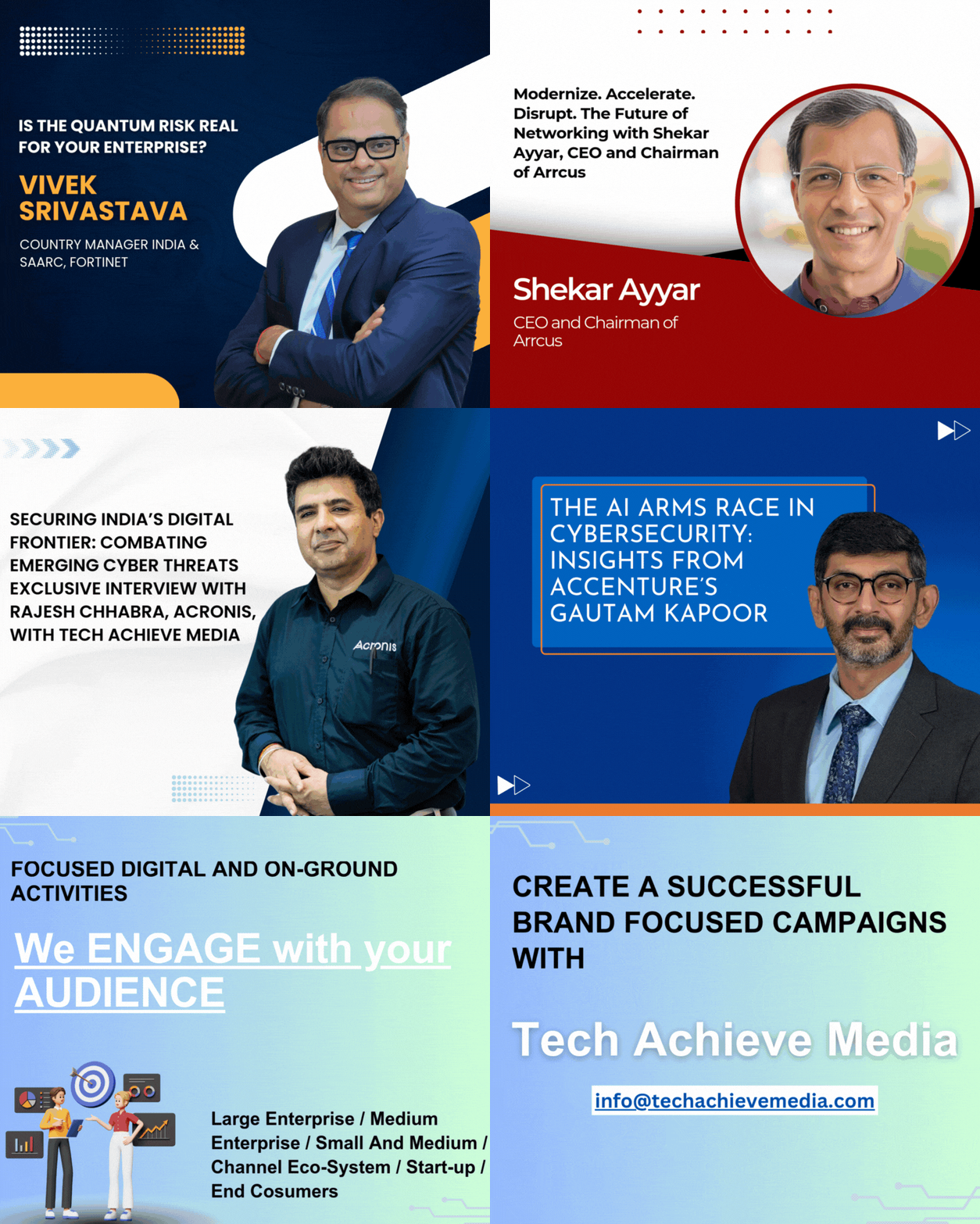
Gautam Kapoor, Managing Director and Lead for Cybersecurity, Accenture in India, said: “In India, rapid AI adoption is reshaping the cyber risk landscape, with cyber-enabled fraud and AI driven threats becoming more pervasive and sophisticated. To stay competitive and resilient, business leaders need to treat cybersecurity as a core pillar of economic trust and national resilience. This calls for clear, responsible AI governance and a shift toward intelligence driven defenses. By strengthening AI oversight and operational continuity, organizations in India can protect trust, safeguard growth, and secure innovation in an increasingly AI led digital economy.”