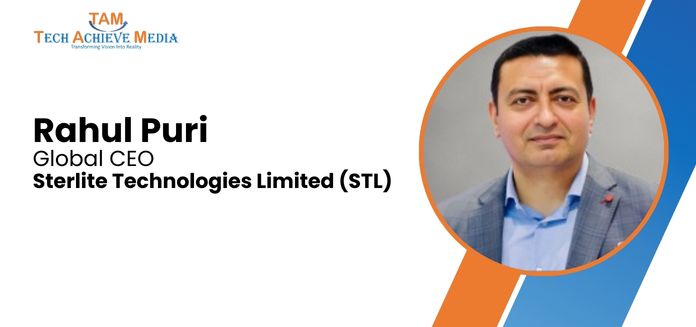
Rahul Puri: One of the biggest challenges the industry is facing today is time. Across markets, organisations are under pressure to build and operationalise data centres far more rapidly than originally planned, and many are currently behind their rollout targets. We are seeing strong pent-up demand in the US market, alongside increasing localisation of data libraries, both of which are further accelerating infrastructure requirements.
When it comes to data transport, fibre optics remains the most efficient and effective medium. It continues to be the most cost-efficient, energy-efficient, and reliable way to connect and move large volumes of data. While alternatives may be considered during periods of supply constraints, there is currently no comparable technology that checks all these boxes at scale. That said, technology continuously evolves, and innovation remains constant in this space.
Even within fibre, there is significant innovation underway across cables, connectorisation, and materials. The demand to pack more fibres into smaller diameters is growing rapidly. Developments such as rollable ribbon fibre, low-diameter glass, and bend-insensitive fibre are driving both performance and scalability. As one of the early global innovators in several of these areas, STL remains strongly positioned to address the evolving technical challenges of our customers as the industry continues to grow.
TAM: You have set a target that the enterprise plus data centre segment should be 25 percent of your revenue in the coming year. How has this expanded portfolio, especially the data centre offerings, strengthened your overall transformation journey so far?
Rahul Puri: While we have been active in the data centre and enterprise segment for some time, it was approximately a year ago that we made a focused commitment to build a comprehensive, end-to-end portfolio addressing the full spectrum of data centre requirements. Since then, we have been consistently rolling out new products tailored to the evolving needs of customers in this space.
A defining characteristic of the hyperscaler market is the high degree of standardisation in product specifications, combined with the need for high fibre counts, low latency, and highly dense network architectures. In addition, there is growing demand for specialised solutions, including fire-rated products for deployment within data centre environments. These areas remain central to our product strategy.
This focus is already reflected in our performance, with nearly a quarter of our revenue now coming from the data centre and enterprise business as of the last quarter. Looking ahead, over the next 12 to 18 months, we expect this segment to scale to a level comparable with our traditional telecom and broadband business. This outlook is supported by the scale of investment flowing into the data centre ecosystem, estimated in the trillions of dollars, of which approximately 20–30% is directed towards fibre and connectivity solutions. Given the size of the opportunity, we are strategically positioned to capitalise on this momentum and build a strong, sustainable business in the data centre domain.
TAM: Western markets are aggressively pushing ‘China Plus One,’ which should theoretically benefit STL. However, we see aggressive pricing from Chinese players in non-US markets like Europe and Southeast Asia. How do you defend your margins in these territories without engaging in a race to the bottom on price?
Rahul Puri: I would clearly position STL as a true Indian multinational. We operate manufacturing facilities across key global markets, including two plants in Italy, one in the United States, one in China, and seven facilities in India. While we are present in over 100 countries, our strategy has always been to combine global reach with strong local manufacturing capabilities, enabling us to support customers within their respective regions.
In the context of today’s evolving geopolitical and supply-chain dynamics, this model places STL in a particularly strong position. We have seen this advantage firsthand during periods of supply-chain disruption, where our European facilities served customers across Europe, our US operations supported local demand, and India continued to function as the core manufacturing hub fulfilling the majority of global requirements.
Equally important is our approach to the market. We have never positioned ourselves as price-driven competitors. STL does not believe in competing on low price or compromising on quality. Our success across Western and global markets is rooted in a fundamentally different engagement model. We do not operate on a catalogue-selling approach. Instead, we work closely with customers to understand and solve their specific challenges.
Our engineering and technology teams often collaborate directly with customers, in some cases embedding themselves within customer R&D environments to co-create solutions, ranging from addressing highly specific technical issues to solving complex, large-scale network challenges. This collaborative, problem-solving approach is something we are actively doing today, including with leading hyperscalers, and it distinctly differentiates STL from many of our peers.
TAM: With the BEAD (Broadband Equity, Access, and Deployment) program funding rolling out in the US, there is a ‘Buy America’ mandate. How has this worked out for the South Carolina plant?
Rahul Puri: To be very clear, BEAD currently represents only a small portion of overall fibre demand in the United States. Today, the market is primarily driven by large-scale telecom deployments and hyperscaler-led data centre expansion, which together constitute the two most significant demand drivers for fibre optics. While STL’s local presence in the US provides a strategic advantage, the larger growth opportunity extends well beyond government-led programmes such as BEAD and BAPA.
TAM: Where does STL see the most exciting opportunity in building India’s digital infrastructure?
Rahul Puri: The awarding of BharatNet tenders is expected to trigger the next wave of fibre deployment and demand across the Indian market. This is particularly important as India has built a strong digital advantage, and it is critical that the country continues to remain at the forefront of this transformation rather than falling behind.
While the mobile revolution played a key role in expanding internet access nationwide, robust fibre connectivity will be far more critical to India’s long-term economic uplift and inclusive growth. Global data clearly shows that strong fibre penetration can contribute up to half a percentage point to GDP growth, underscoring its strategic significance.
Beyond broadband, India is also witnessing significant momentum in data centre investments, driven by data localisation requirements and large-scale deployment announcements from both global and domestic players. In parallel, STL continues to work closely with India’s defence networks to build resilient, high-capacity backbone infrastructure for all three armed forces, which represents another area of strong potential.
Additionally, the recent launch of India’s first multi-core fibre opens up new opportunities for enterprise and technology-led industries by addressing increasingly complex network challenges. India remains our home market and a core strategic priority. Our focus is not merely on supplying existing products, but on introducing the most advanced and innovative technologies, often ahead of global adoption, to our Indian customers.
TAM: India’s digital ambition is massive, while government projects like BharatNet can be large but often come with longer cycles. As a CEO, how do you balance the patriotic duty of building India’s digital spine with the fiduciary duty of protecting the growth of your company?
Rahul Puri: I do not see nation-building and business objectives as being counterintuitive; in fact, they go hand in hand. Contributing to the development of national digital infrastructure does not preclude commercial success; it is about conducting business in a strong, ethical, and sustainable manner. Over the past few years, increased transparency and end-to-end digitisation of government processes have further strengthened the environment for credible, long-term industry participation. This creates meaningful opportunities for serious players to collaborate as partners in the government’s digital vision.
With respect to timelines, rural broadband deployments globally tend to progress at a measured pace. These networks are inherently complex to build, involve longer spans, and typically offer lower immediate returns on investment. However, they do move forward steadily. Importantly, several structural and policy-level roadblocks have been addressed under the current administration, which should significantly accelerate BharatNet deployment. As a result, we are confident that these projects will be completed faster than the stipulated timelines.
TAM: Indian telcos have rolled out 5G at record speed, yet monetisation remains a challenge for them. If their capex cycles dry up in 2025-26 to focus on ROI, what would that mean for STL? Is there a ‘Plan B’ if domestic telco spend hits a cliff?
Rahul Puri: Our global presence has significantly de-risked the business. Today, STL serves customers across approximately 110 countries, which allows us to effectively navigate the cyclical nature of this industry. Telecom and digital infrastructure are secular businesses, marked by periodic upcycles and downcycles, and geographic diversification helps balance these fluctuations.
We have seen this play out across regions. Europe experienced strong post-COVID growth, which supported demand during that phase. The US is now witnessing robust momentum, driven by hyperscaler investments, FTTP rollouts, and 5G deployments. India, meanwhile, has progressed at a steady pace over the past few years, and is now entering a more accelerated phase of growth.
While telecom spending cycles can vary, government-led initiatives such as BharatNet have begun to take the lead. Data centre investments in India are still at an early stage, but announcements are increasing and capital is starting to flow, which will inevitably translate into higher network requirements. Currently, a significant portion of our revenues is still driven by telecom customers; however, data centre demand is expected to scale rapidly.
In addition, existing network infrastructure in India may not be sufficient to meet the future needs of enterprise and hyperscale customers. This is likely to drive the creation of new private networks, either in partnership with telecom operators or through independent deployments, to support next-generation workloads. As a result, we are more bullish on India today than we were a year ago.
Demand is clearly trending upward. Telecom operators continue to deploy steadily, recognising that there is still considerable ground to cover. Tower fibreisation remains in the range of 10 to 12%, significantly lower than global benchmarks of 30 to 50% in developed markets. This gap highlights the substantial untapped potential that still exists in the Indian market.
TAM: What is your long-term vision for STL, both in India and globally, as the world moves towards AI-ready, cloud-first digital infrastructure?
Rahul Puri: Internally, we now view our business as being structured around four distinct verticals. The first is our fibre and glass business, which remains our core strength and foundational capability. This continues to be a strategic focus as we pursue our ambition of becoming one of the top three global players in the fibre optics industry.
The second vertical is connectivity solutions, a segment that has demonstrated steady growth over the past three to four years since our entry into this space. The third is our data centre and enterprise business, which now accounts for nearly a quarter of our overall revenues and is on track to scale to a level comparable with our traditional telecom and broadband businesses.
The fourth pillar is our copper business, which continues to progress at a stable pace. There remains consistent demand for copper solutions within data centres as well as across enterprise environments.
Together, these four strategic pillars provide a strong and balanced growth platform for STL. Market demand remains robust, and we believe we have the right assets, global talent, and financial strength to continue investing and scaling the business. This positions us well for sustained growth in the years ahead.