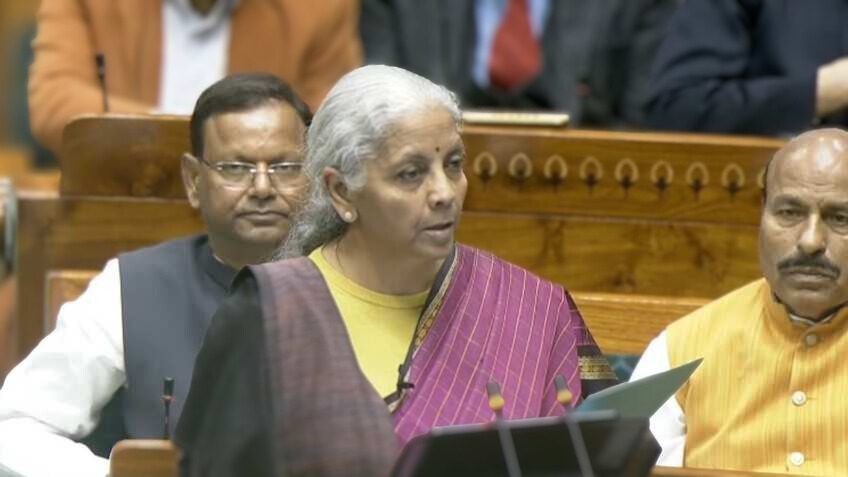
The Union Budget 2026 was announced on 1 February 2026 by Nirmala Sitharaman, Union Minister for Finance, Government of India in the Lok Sabha. The announcements have invited reactions across India’s technology, enterprise, manufacturing, space, education, finance, sustainability and cybersecurity ecosystems, with industry leaders viewing the Budget as a decisive move towards long-term capability building, AI-led growth and global competitiveness.
CP Gurnani, Co-Founder and Vice Chairman, AIONOS, said the Budget signals a foundational shift in India’s technology approach: “Union Budget 2026 signals a decisive shift in how India is approaching technology, from adoption to strategic capability building. The emphasis on AI, semiconductors, cloud and data infrastructure reflects a clear understanding that leadership in the digital economy is built bottom-up, starting with strong foundations. The strengthening of the India AI Mission provides a coordinated framework to accelerate AI research, deployment and ethical governance across sectors. Importantly, this is not a narrow tech agenda. By aligning AI investments with skilling, workforce readiness and MSME enablement, the Budget recognises that scale, inclusion and competitiveness must move together. Equally important is the focus on preparing for AI’s impact on the services sector. For a country where services drive growth and employment, anticipating change is far more responsible than reacting to disruption. Incentives for digital infrastructure and hardware ecosystems position India as a credible destination for global investment. As technology becomes central to economic growth, its true impact lies in how inclusively it is applied. Initiatives like Bharat Vistar, which provides farmers local-language, data-driven crop guidance, and the Centre of Excellence in AI for Education, which promotes research into AI tools for improving the quality of learning, demonstrate how technology can create meaningful impact where it matters most. Taken together, these measures reflect India’s ambition to move from being a large consumer of technology to a trusted global platform for AI-led innovation, grounded in talent, infrastructure and real outcomes.”
Arundhati Bhattacharya, President and CEO, Salesforce South Asia, described Budget 2026 as a blueprint for an AI-powered economy: “Budget 2026 represents India’s transformation from technology consumption to AI-powered innovation, a blueprint for a $7 trillion economy built on intelligence, not just scale. The strategic architecture is balanced and long-term. The tax holiday until 2047 for cloud services is a masterstroke in data sovereignty, attracting an estimated $50 billion in data center investments by 2030 while positioning India as the cloud hub for emerging markets. MSME reforms demonstrate sophisticated thinking. The Rs 10,000 crore SME Growth Fund, combined with the TReDs platform mandate and expanded safe harbor thresholds, creates force multipliers enabling India’s 63 million MSMEs to scale from survivors to global champions.
The High-Powered Committee on Education to Employment targets capturing 10% of global services trade by 2047, ambitious but achievable given our demographic advantage: 65% under 35, digital infrastructure like UPI and Aadhaar. AI integration is refreshingly pragmatic. Bharat-VISTAAR’s multilingual agricultural platform and AI in school curricula show generational thinking, ensuring our demographic dividend becomes an intelligent dividend. We see the Budget as a structural roadmap that creates an environment where technology, enterprises, and individuals can unite to collectively propel India’s future advancement. However, the critical gap remains R&D investment, we risk becoming sophisticated consumers of AI rather than creators.
The Union Budget’s design powers national growth, driven by AI, cloud sovereignty, and innovative digital platforms. This technological foundation is key to defining the future of growth, and Salesforce fully embraces this opportunity.”
Anuj Khurana, Co-founder and CEO, Anaptyss, said the Budget positions India for AI-first enterprise growth: “Union Budget 2026-27 sends a clear signal that India’s digital competitiveness will be built on scalable AI adoption, stronger digital infrastructure, and enterprise-led innovation. Continued focus on compute, data, and talent will help technology and services organisations move from efficiency-driven models to outcome-led, AI-first operations that support global enterprises. Equally important is the emphasis on predictability and long-term policy alignment, which enables enterprises to make sustained investments in global delivery, engineering capabilities, and advanced digital platforms. This will reinforce India’s position not just as a technology services hub, but as a strategic innovation partner for global businesses.”
Also read: Union Budget 2026 Announces Tax Holiday for Cloud Services Till 2047
Ankit Agarwal, Managing Director, STL, highlighted the shift toward capability-led leadership: “The Union Budget 2026 signals a shift from scale-led growth to capability-led leadership, rooted in Viksit Bharat and the three kartavyas of competitiveness, participation, and inclusion. A strong Atmanirbharta push, with Rs 40,000 crore allocated for electronics components, ISM 2.0, Rare Earth Corridors, and capital goods support, builds self-reliant digital and telecom foundations.
The Budget also pivots to a technology-led services economy, targeting global leadership by 2047 via enhanced IT safe harbour rules, an AI-jobs committee, and a 20-year tax holiday for India-based cloud data centres. By fortifying supply chains, easing trade barriers, and boosting exports, it positions India as a global hub for digital infrastructure design, manufacturing, and deployment.”
Atul Soneja, Chief Operating Officer, Tech Mahindra, said the Budget reinforces India’s role as a trusted innovation partner: “The Union Budget 2026 reinforces India’s emergence as a trusted technology and innovation partner. The Government’s recognition of cutting-edge technologies such as Artificial Intelligence as force multipliers for good governance is particularly encouraging. It underscores the pivotal role of the Indian IT industry in delivering innovation, efficiency and scalable digital solutions for the nation. Initiatives such as the IndiaAI Mission, National Quantum Mission, National Research Fund and the enhanced R&D ecosystem reflect a bold, inclusive, and future-ready vision. This alignment of policy, technology and talent will accelerate India’s journey toward becoming a global innovation powerhouse. Additionally, the launch of India Semiconductor Mission 2.0 will significantly strengthen the country’s technology ecosystem by deepening the integration of hardware and software capabilities, positioning India as a leader in next-generation digital infrastructure.”
Anku Jain, Managing Director, MediaTek India, welcomed the semiconductor push: “The expansion of India Semiconductor Mission through ISM 2.0 in Budget 2026 is a strong step towards building India as a global semiconductor hub. By prioritizing the development of full-stack Indian IP and domestic equipment manufacturing with continued policy support, the government is fostering an environment to boost innovation and design, strengthening India’s competitiveness by supporting scale, speed and just-in-time manufacturing.”
Lt. Gen. AK Bhatt (retd.), Director General, Indian Space Association (ISpA), pointed to opportunities for private participation: “We are hopeful that today’s Budget, with its emphasis on easing processes and creating a more investment friendly environment for science and technology, will encourage greater private sector participation. The increase in ISRO’s allocation to Rs 13,705.63 crore in FY 2026–27 is an important signal that will help support deeper private sector participation in ISRO led programmes across launch vehicles, satellites and scientific missions. Alongside this, the announcement on expanding telescope infrastructure and learning facilities is a meaningful step towards strengthening India’s scientific base in astrophysics and astronomy. Together, these measures can improve observational capabilities, enable long term research and strengthen collaboration between ISRO, academia and industry, gradually enhancing India’s contribution to global space science and the broader space ecosystem.”
Agendra Kumar, Managing Director, Esri India, said the Budget creates strong opportunities for the geospatial sector: “The Union Budget’s strong emphasis on long-term growth, Atmanirbharta, and India’s emergence as a global manufacturing and logistics hub creates significant opportunities for the geospatial sector. The substantial increase in capital expenditure to Rs 12.2 lakh crore, with a clear focus on freight and rail corridors, inland waterways and multimodal infrastructure, will play a critical role in reducing logistics costs and turnaround times. Investments aimed at improving Tier-2 and Tier-3 cities, alongside the AMRUT programme, will accelerate balanced urban development. The Rs 1.4 lakh crore provision to the states will lead to initiatives that will underscore the growing role of geospatial intelligence in planning, monitoring and decision-making, positioning the sector as a key enabler of India’s development agenda.”
Ganesh Gopalan, Co-Founder and CEO, Gnani.ai, called the Budget forward-looking: “The Union Budget 2026 is a timely and forward-looking budget, with the Finance Minister rightly highlighting that AI will have a strong multiplier effect on the Indian economy. The focus on assessing the impact of emerging technologies like artificial intelligence on jobs and skills reinforces the need to prepare for this shift. The adoption of AI and rapid tech advancements is essential for inclusive national progress, driving productivity and new economic opportunities. Taxation benefits for data centres and safe harbour clauses will further enable large-scale AI model training and infrastructure growth. Initiatives like multilingual AI-based agriculture tools for farmers show meaningful grassroots impact, while large-scale upskilling and industry–academia collaboration remain key to building a future-ready workforce”
Sunil Arora, National Head, Taxation, ASA & Associates, commented on tax reforms: “The taxation of buybacks as capital gains is a welcome step towards simplification of shareholder taxation, specifically beneficial for minority and non-promoter investors. The additional levy of on promoters at 30% (non-corporate) /22% (corporate) appears to be an anti-arbitrage measure that addresses the use of buybacks as a dividend substitute. This could materially alter promoter-level tax outcomes and requires revisiting exit strategies.”
Sharad Malhotra, Managing Director, Nippon Paint (India) Group, said the Budget balances growth and discipline: “Union Budget 2026 reinforces the government’s focus on sustaining economic momentum through higher capital expenditure, infrastructure creation and fiscal discipline. This continued emphasis on investment-led growth will be critical in supporting India’s long-term ambition of becoming the world’s third-largest economy while creating meaningful employment at scale. The proposal to support states in setting up three dedicated chemical parks through a cluster-based, plug-and-play framework is a timely step. It will strengthen domestic manufacturing capabilities, improve supply chain efficiency and reduce import dependence, which is particularly important for sectors such as paints and coatings that rely on a robust chemical ecosystem. Overall, the Budget reflects a balanced approach that combines industrial growth, technological advancement and sustainability. By improving ease of doing business amid a volatile global environment, it lays the foundation for higher productivity, long-term manufacturing resilience and India’s emergence as a globally competitive industrial hub.”
Avinash Kumar, COO, DJT Microfinance, highlighted inclusive growth: ”Budget 2026-27 truly honors the spirit of ‘Sabka Saath, Sabka Vikas’ by focusing on inclusive development at the grassroots level as a key driver of growth for the rural economy. The emphasis on ‘SHE Marts’ to empower women entrepreneurs and the top-up of the Self-Reliant India Fund for micro-enterprises, with banks now covering 98% of villages, will aid financial inclusion, ensuring that the dividends of our 7% growth reach the last mile, turning every village into an engine of economic participation.”
Vasudha Madhavan, Founder and CEO, Ostara Advisors, pointed to execution-focused reforms: “This Budget reflects a shift from aspiration to execution. The creation of rare earth corridors in mineral-rich states addresses a critical supply-chain vulnerability by anchoring domestic manufacturing capabilities. Importantly, the Rs 20,000 crore commitment to carbon capture and storage establishes a credible foundation for decarbonising hard-to-abate sectors such as power, steel, and cement, where alternatives remain limited at scale. The government’s phased, programmatic approach to CCUS enables industrial emissions reduction without disrupting growth, strengthens energy security, and advances India’s net-zero pathway in a pragmatic, economically aligned manner.”
Monica Pirgal, CEO, Bhartiya Converge, said the Budget removes long-standing friction points: “By unifying IT services, easing safe harbour norms, and decisively rewarding scale, the government has removed the core friction points that global enterprises faced while expanding in India. The move to a single IT Services framework and predictable margins replaces years of classification ambiguity and tax uncertainty with clarity and confidence. Most notably, raising the safe harbour threshold to ₹2,000 crore signals a powerful shift scale is no longer penalised but actively encouraged. Combined with automated approvals, long-term incentives for cloud and data infrastructure, and a renewed focus on services-led employment and skills, India is no longer competing only on cost. It is positioning itself as the most predictable, scalable, and future-ready global operations hub for enterprises building long-term value”
Dr. Sanjay Gupta, Vice Chancellor, World University of Design, welcomed the creative economy push: “The Budget’s strong push towards the creative and design economy is a welcome step for India’s youth. I have been advocating for this. By expanding AVGC and content creation labs across schools and colleges, the government is opening doors to future-ready careers within the growing creative economy. The proposal to strengthen design education addresses a long-standing talent gap. Together, these measures will nurture creativity, generate meaningful employment, and position India as a global hub for design, content, and innovation”
Nilanjan Banik, Professor of Economics and Finance, School of Management, Mahindra University, said markets would value continuity: “From a macroeconomic standpoint, Budget 2026 signals continuity and discipline, which markets value. The transition to the Income Tax Act 2025 is a welcome move toward simplicity and transparency for the common taxpayer. By restructuring PFC and REC and forming a high-level committee for ‘Viksit Bharat’ banking, the government is ensuring our financial sector is robust enough to handle global volatility. The push for asset monetization through REITs and the 12.2 lakh crore capex will provide the necessary liquidity to keep the ‘Reform Express’ moving. It is a stable, non-populist budget that prioritizes long-term economic resilience over short-term gains.”
Sunil Gupta, Co-founder, CEO and Managing Director, Yotta Data Services, said the Budget anchors cloud infrastructure in India: “The Union Budget 2026 marks a decisive and well-thought-out shift in how India approaches cloud and data centres, recognising them as long-term strategic infrastructure that underpins AI adoption, digital public services, and economic growth. The announcement of a tax holiday till 2047 for global cloud operators setting up data-centre infrastructure in India is a strong signal aimed at accelerating capital inflow, early capacity creation, and faster enterprise cloud adoption at scale. At the same time, the introduction of a clear safe harbour provision including a defined 15% tax on cost for cloud and data-centre services delivered through Indian operating entities addresses a different but equally important objective: long-term certainty and scalability.
In practice, while the tax holiday helps global players enter India quickly, large-scale and mission-critical operations naturally gravitate towards Indian entities because predictability in taxation, compliance, and regulatory alignment matters far more than headline tax rates as businesses scale. As cloud and AI workloads move from experimentation to regulated and business-critical deployment, global cloud providers are therefore unlikely to own and operate all physical infrastructure themselves. Instead, they will increasingly adopt asset-light models outsourcing both colocation and high-performance GPU infrastructure to trusted Indian partners while focusing on platforms, software, and customer engagement. This allows them to scale rapidly, manage capital and technology risk, and operate within a stable and transparent tax framework under the safe harbour regime.
For sovereign Indian platforms like Yotta, this evolution creates strong complementarity rather than competition. As hyperscalers localise through Indian entities and expand their India footprint, demand for hyperscale data centres combined with GPU-dense, AI-optimised infrastructure will rise sharply – areas where Indian operators with deep local execution capabilities, regulatory alignment, and energy-backed capacity are uniquely positioned. In that sense, Budget 2026 does more than attract global investment. It expands the overall AI and cloud market while anchoring global platforms within the Indian ecosystem, reinforcing the strategic role of Indian cloud and data-centre companies as the sovereign, compliant, AI-ready infrastructure backbone of India’s digital future.”
Major Vineet Kumar, Founder and Global President, CyberPeace, highlighted cybersecurity as foundational: “Union Budget 2026–27 makes it clear that India’s growth ambitions are now inseparable from its digital and security foundations. With public capex rising to INR 12.2 lakh crore and a long-horizon tax holiday till 2047 for global cloud service providers operating data centres in India, the Budget sends a strong signal that India wants to build at scale across AI, cloud, deep-tech, and future-ready infrastructure. This is not just about steel and cement; it is a mandate for software, data platforms, cybersecurity, and intelligence layers. As India sustains 7% growth while expanding digital public services to millions, cybersecurity emerges not as a technical afterthought, but as a core economic and national capability that must grow alongside scale and innovation.”
Vishak Raman, Vice President of Sales, India, SAARC, SEA and ANZ at Fortinet, said: “Budget 2026 reflects India’s intent to strengthen its position as a trusted hub for digital services, cloud, and advanced technologies. Steps to simplify the IT services framework, encourage data center investments, and push wider AI adoption are aimed at building long-term competitiveness. At the same time, as digital infrastructure scales, complexity, and cyber risk increase. Cyber risk today is continuous, not episodic, and organizations need to plan for resilience as a core business requirement. Embedding security into digital foundations will be critical to protecting data, ensuring continuity, and maintaining trust as India’s digital economy continues to expand.”