The Union Budget 2026 has elicited wide-ranging reactions from India’s startup ecosystem, technology leaders, legal experts, and emerging sectors, with industry stakeholders largely welcoming the government’s continued focus on artificial intelligence, innovation-led growth, skills development, and regulatory reform as foundational to India’s long-term economic ambitions.
Sunil Gupta, Co-Founder and CEO, QNu Labs, said: “India stands at the threshold of a technological transformation, and the Union Budget 2026 charts a path for the country to assert itself as a global leader in deep tech and secure digital infrastructure. The expansion of the India Semiconductor Mission 2.0 and targeted allocations for high-value technology platforms signal a clear commitment to building sovereign capabilities. For the technology and security ecosystem, this Budget recognises the urgent need to secure digital assets, enable indigenous research, and develop resilient technology stacks. With the rise of quantum computing and post-quantum cybersecurity, sustained R&D support is critical to safeguarding India’s strategic advantage. Initiatives like the Rs 10,000 crore Fund of Funds, expanded credit guarantees, and MSME and startup reforms address capital barriers, empower high-risk, high-impact innovation across AI, semiconductors, quantum technologies, and cybersecurity and support millions of jobs, enabling Indian innovators to deliver solutions of national and global significance.”
on a similar note, Sachin Tayal, Managing Director, Protiviti Member Firm for India, stated: “The 2026 Budget clearly signals an intent to drive India’s growth towards a more sustainable and future-ready economy. An important provision has been made for data centers and cloud service providers operating in India, which offers a long-term tax holiday. This strengthens India’s goal of becoming a global center for cloud, AI, and data-led services and makes digital infrastructure a national priority. It is a significant step toward expanding the digital economy, drawing in international investment, and producing skilled jobs. The Budget signals a commitment to steady, sustainable, and broadly distributed growth. By prioritizing areas such as MSMEs, manufacturing, skills development, green energy, and digital systems, the intent is to foster innovation across the entire economy rather than confining it to a limited number of major sectors. Furthermore, the persistent focus on ESG principles underscores the belief that contemporary growth must be grounded in transparency, trust, and robust governance. For businesses, policy intent now needs to be matched with execution. Companies must strengthen their operating models, manage risks better, use technology responsibly, and invest in cybersecurity and compliance. Companies that will combine growth with resilience and strong governance will be best equipped to compete on a global scale and make a significant contribution to establishing India’s long-term economic leadership.” – Sachin Tayal, Managing Director, Protiviti Member Firm for India.”
On the tax holiday announcement, Sudhir Kunder, CBO, DE-CIX India, said: “The Budget 2026 tax holiday for global cloud providers using India-based data centres is a decisive policy move that positions India as a long-term digital infrastructure and AI growth hub. As hyperscalers expand, the real differentiator will be resilient, carrier-neutral interconnection that enables low-latency access, ecosystem depth, and scalable digital economies.”
On the measures announced around skilling, Sashi Kumar, Managing Director, Indeed India, said: “Measures like the Education-to-Employment and Enterprise Standing Committee, sector-specific skilling in healthcare and services, and industry-linked training in textiles directly target the employability gap. Over the next 6–12 months, these steps will show up as more skills-aligned hiring, especially across labour-intensive sectors and MSMEs. The real impact of this Budget is a workforce that’s better prepared for the job’s employers are ready to create, shifting the focus from simply increasing hiring to enabling better hiring.”
Welcoming the enhanced allocation for startup financing, Saurabh Srivastava, Co-founder, IAN Group, said, “The government’s long-term dedication to India’s entrepreneurial environment is demonstrated by the inclusion of ₹10,000 crore to the Fund of Funds. This approach would enhance early-stage finance and contribute to India’s transformation into a globally competitive innovation hub by catalyzing capital through Alternative Investment Funds that have already mobilized significant investment.”
Also read: Union Budget 2026 Announced: Important Highlights for Industry
Echoing the importance of deepening institutional participation in early-stage ventures, Ranjeet Shetye, DeepTech investor and Mentor at YourNest VC, stated, “The Budget makes it clear that innovation-led entrepreneurship is essential to India’s next stage of development by establishing a new Fund of Funds with a larger scope and a sizable new commitment. By luring institutional money into early-stage companies, this strategy not only gives businesses a much-needed fundraising runway but also enhances the venture ecosystem as a whole.”
Artificial intelligence emerged as a central theme in Budget 2026, with targeted allocations for research, missions, and capacity building. Commenting on this focus, Vipul Prakash, Founder and CEO of FireAI applauded the Government’s Intelligence-First vision in the Union Budget 2026. The specific allocation for Capacity Building AI Missions and the operationalization of the Anusandhan National Research Fund are landmark steps. They signal a shift from simply adopting technology to deepening our indigenous R&D capabilities.
He further added, “For the Indian tech ecosystem, the commitment to emerging technologies as a driver of inclusive growth is encouraging. When combined with the ₹10,000 Crore SME Growth Fund, this Budget creates a powerful flywheel. The Research and Development and Innovation Fund will build the tech, and the Capacity Building Missions will ensure our workforce is ready to use it. At FireAI, we are ready to support this vision by helping these newly empowered businesses turn data into their strongest asset.”
From a legal and regulatory standpoint, the Budget’s reform agenda was described as a structural reset. Abhinav Saxena, Founding Partner at Saxenas And Kumar Law Chambers LLP quoted, “The Union Budget 2026 is a definitive step towards de-clogging India’s legal and regulatory arteries. We specifically welcome the proposal to implement a comprehensive New Income Tax Act to replace the six-decade-old law. For the legal fraternity and our corporate clients, this simplification is a long-awaited reform that will drastically reduce interpretation disputes and compliance friction.
Furthermore, the focus on digitizing NCLT tribunals and the introduction of a Customs Amnesty Scheme signal a clear shift towards a Trust-Based governance model. By smoothing out the insolvency process and reducing legacy tax litigation, the Government is allowing firms to focus on value creation rather than courtroom battles. For startups and MSMEs, this Ease of Doing Business is the most valuable capital of all.”
Technology services companies highlighted the need for execution and export enablement. Ravi Kumar, CEO Cubastion, said: “This year’s Union Budget can help the Indian software industry scale up from pilot projects to full-blown deliveries. The Indian government has laid an impressive foundation with fully digital public infrastructure and emerging sectors such as AI. Now, the focus needs to be on implementation.
Support for the adoption of AI is one of the major expectations. This is because start-ups, as well as software companies, require ease of access to computing resources, guidelines on the use of data in the cloud, as well as factors that will help them develop AI solutions that address problems. For technology service providers, exports are very important. Facilitation of high-tech exports, skills development, and timely approval of foreign projects will help Indian players compete internationally. We urge the government to support those building valuable, scalable solutions for businesses and the government. With sustained policy support, the Indian software industry can provide high-quality employment, go up the value chain, and contribute more to India’s digital evolution. We also urge the government to provide clearer and predictable data sovereignty and localisation policies so that Indian software and AI companies can build secure, globally trusted solutions from India and attract more investment.”
Deep-tech and applied AI players also welcomed the shift from pilots to scaled deployment. Atul Rai CEO and CO founder of Staqu Technologies said: “The Union Budget 2026–27 clearly recognises artificial intelligence as a strategic driver of inclusive growth and governance efficiency. The emphasis on AI missions, research funding, semiconductor ecosystem development, and capacity building reflects a shift from experimentation to deployment at scale. By aligning AI with national priorities such as infrastructure, public services, logistics, and security, the government is creating a robust ecosystem for applied artificial intelligence. Equally important is the focus on skilling and education-to-employment pathways, which will ensure that AI adoption is supported by a future-ready workforce. As AI becomes embedded across sectors, solutions that translate advanced research into real-world applications will play a critical role in enhancing productivity, safety, and operational efficiency across India’s rapidly expanding digital and physical infrastructure.”
On the manufacturing and electronics front, Abhishek Garg, Director, DBG Technology Pvt. Ltd, said, “Union Budget 2026 further strengthens the foundation for the Government’s enhanced capital expenditure and progressive industry-focused schemes — particularly the expansion of the India Semiconductor Mission 2.0 with a significant outlay — signal a transformative push for electronics, semiconductors and high-value tech manufacturing. The emphasis on electronics components manufacturing, skills development and strategic investment incentives is a decisive step toward reducing import dependence and scaling indigenous capabilities. We are encouraged by this forward-looking policy framework that aligns with our commitment to innovation, ‘Make in India’, and empowering the Indian technology ecosystem. We believe the budget focuses on accelerating growth for the industry but will also help in strengthening India’s position in the global technology landscape, inspiring confidence for long-term investment, job creation, and sustained competitiveness.”
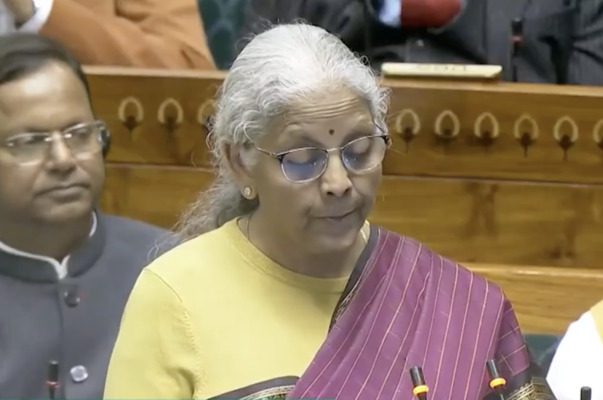
Reacting to the AI-related announcements made by Finance Minister Nirmala Sitharaman, Anurag Jain, CEO and Founder of Oriserve, said, “The government’s renewed focus on AI and emerging technologies signals a clear intent to move India from technology adoption to technology leadership. Strengthening national missions around AI, deep-tech R&D, and innovation creates a strong foundation for building scalable and responsible digital systems. For the fintech ecosystem, continued policy backing for the AI Mission and R&D funding will accelerate intelligent solutions that improve efficiency and financial inclusion. Initiatives like Bharat Vistaar emphasize the importance of multilingual, AI-led platforms in widening access. This approach is especially relevant for financial services, where trust, personalization, and reach are critical.”
Highlighting the broader nation-building role of deep-tech, Dr. Kanishk Agrawal, Chief Technology Officer at Judge group India, said, “The government’s clear focus on AI and emerging technologies marks a defining shift in how India is approaching inclusive economic growth. By strengthening national missions such as the AI Mission, National Quantum Mission, and the R&D and Innovation Fund, the budget signals that deep-tech is no longer peripheral but central to nation-building. The launch of Bharat Vistaar, a multilingual AI platform integrating agri-stack portals and ICAR data, is particularly significant it reflects how advanced technology can be democratised for real-world impact. AI-led advisory tools have the potential to transform agriculture by improving productivity, enabling data-driven decisions, and reducing risks for farmers, especially in underserved regions. What stands out is the intent to align innovation with accessibility, ensuring that technology-driven growth benefits not just enterprises and institutions, but also grassroots stakeholders who form the backbone of India’s economy.”
Cybersecurity considerations were also flagged as critical. Mandar Patil, Senior Vice President, Sales at Cyble, said, “The government’s strong push toward AI and emerging technologies marks a pivotal step in positioning them as engines of inclusive economic growth and national development. Strengthening national missions around AI, quantum computing, and deep-tech R&D signals a clear intent to build future-ready digital infrastructure at scale. As initiatives like Bharat Vistaar leverage multilingual AI platforms to democratize access to data and insights, it becomes equally critical that cybersecurity is embedded by design into these systems. From protecting sensitive agricultural and citizen data to ensuring the integrity of AI-driven decision-making, secure-by-default frameworks will be central to long-term trust and adoption. Enhanced funding for AI and innovation creates an opportunity to integrate advanced threat intelligence, continuous monitoring, and resilient architectures into next-generation platforms. A secure AI ecosystem will not only accelerate innovation but also ensure that India’s digital growth remains trusted, resilient, and sustainable as the country advances toward its Viksit Bharat vision.”
From the education and employment lens, Vishal Sood, Founder and CEO, Placecom, said, “The Union Budget must prioritize the integration of Artificial Intelligence into India’s higher education system, making it mandatory across all disciplines. AI has the potential to revolutionize learning by offering personalized education, adaptive assessments, and data-driven career guidance. By mandating AI-driven curricula, upgrading teacher training, and fostering research in AI, we can create a future-ready workforce. Additionally, encouraging collaboration between academia and startups will drive innovation, allowing MSMEs to leverage AI for growth. Targeted budget allocations should fuel these efforts, ensuring that students graduate with skills aligned to industry needs, bridging the gap between education and employment. With AI at the core of education, we can empower our youth with the skills needed to thrive in an increasingly digital world, making India a global leader in both innovation and talent development.”
Beyond technology, the Budget’s emphasis on healthcare, care services, and vocational skills also drew attention. Mayank Kumar, CEO and Co-Founder, BorderPlus, said, ‘This is about building India’s care capacity for the world. With ageing populations globally and rising care needs at home, scaling allied health professionals and caregivers can make India a global talent hub for healthcare – while strengthening our own system in the process. Done right, this can position India as a trusted global hub for healthcare talent and care services, while also strengthening domestic healthcare delivery. The proposal to develop university townships near major industrial and logistics corridors is a powerful move to foster education-led innovation. By physically linking universities with industry clusters, this can accelerate applied research, skill relevance, and job creation – turning higher education into a true engine of economic and employment growth. What stands out is the government’s clear investment push into vocational and applied skills – across allied health, caregiving, hospitality, and medical services. With initiatives like AHP institutions, multi-skilled caregiver training, medical tourism hubs, and a National Institute of Hospitality, India is building the workforce backbone the world increasingly needs. This positions India strongly to meet both domestic demand and global talent requirements in care and services. This is a decisive shift towards investing in vocational and applied skills. By scaling care, health, and hospitality talent, India is positioning itself as a reliable workforce partner for the world’s growing service and care needs.’