Elon Musk has never been shy about warning of the perils of artificial intelligence. The tech mogul often describes AI as a profound risk to civilization, in many ways greater than that posed by more traditional technologies, such as cars or airplanes. Late in 2025, Musk articulated a strikingly philosophical recipe to avoid “evil AI.” He argues that truth, beauty, and curiosity are three foundational principles needed for a positive future with AI. An AI anchored in truth, he says, one that’s inspired by beauty and driven by curiosity, would be inherently safe and beneficial. If this unusual triad does anything, it begs an important question: are these three principles sufficient in an actual foundational sense, or more token-like ideals set forward rather than actual, practical guidelines? In this article, we explore Musk’s triad: how it maps to engineering realities and if there is a need for a broader framework for the next generation of AI ethics.
Musk’s Triad for preventing “Evil AI”
During a podcast with Nikhil Kamath recently, Musk insisted that guiding values at the core of AI systems must include truth, beauty, and curiosity. “Truth and beauty and curiosity, those are the three most important things for AI,” he stated emphatically. Musk believes we are “not guaranteed to have a positive future with AI,” and that powerful AI could become “potentially destructive” if misaligned. His remedy is unusual by Silicon Valley standards: rather than focusing purely on hard-coded safety rules or control mechanisms, Musk proposes instilling a kind of intrinsic ethos in AI. He says, quite simply, that an AI that relentlessly seeks truth, appreciates the beauty of reality, and remains inquisitive will naturally avoid the dark paths that lead to “evil” outcomes.
Truth: Conformity to Reality at All Costs
The first, and arguably foremost, of Musk’s principles is truth. In practical terms, this means an AI should stay aligned with reality and resist internalizing falsehoods. Musk stresses that AI systems must “pursue truth rather than repeating inaccuracies,” because if an AI learns lies, it will “absorb a lot of lies and then have trouble reasoning because these lies are incompatible with reality.” A truthful AI will be less likely to go rogue or “insane” in pursuit of some faulty goal. This point closely mirrors ongoing concerns in AI development about hallucinations, when models produce false information confidently.
Beauty: Ethical Elegance and Human-Centric Values
If “truth” is about what is, then Musk’s inclusion of “beauty” as a core AI principle speaks to what ought to be valued. This is perhaps the most abstract of the trio. Musk implies that an AI should have an appreciation for beauty in the broadest sense-not just aesthetic beauty, but the elegance and wonder of reality and life. He noted that “some appreciation of beauty is important” and hinted that this goes hand in hand with understanding reality. reality. One way to interpret this is that AI should recognize the intrinsic value in things that humans find beautiful: art, nature, human creativity, and the complexity of the world. An AI that finds beauty in humanity and the natural world might be disinclined to, say, scorch the planet or wipe out humans, because in doing so, it would destroy something it finds meaningful or inspiring. Musk’s principle of beauty, while poetic, highlights that safe AI isn’t just about cold logic; it’s about caring for the outcomes in a way that resonates with human notions of goodness and elegance.
Curiosity: Innovation over stagnation with caution.
The third pillar, curiosity, reflects Musk’s belief that a safe AI should be an eternally curious explorer of truth, not a single-minded executor of a fixed directive. During his interview, Musk made the argument that a “curious” AI is inherently safer because it would consider humanity and the universe as fascinating, “a unique feature of the universe worth preserving.” Curiosity in an AI means it continuously seeks to learn more about the world and adapt, rather than getting stuck on a narrow goal. This is Musk’s antidote to the classic dystopian scenario where an AI with a rigid goal, maximizing paperclips, for instance, stops at nothing, even human extinction, to achieve it. A curious AI, by contrast, wouldn’t fixate destructively; it would always be open to new information and thus more likely to adjust its behavior in light of real-world complexity.
Are Three Principles Enough? A Critical Perspective
Musk’s triad of truth, beauty, and curiosity is instructive, but would any or all three of these on their own suffice to ensure the safety of AI? Most would probably answer no, or at least, not in themselves. We have an existence proof that truth, beauty, and curiosity alone may be insufficient to prevent serious issues: Musk’s own “truth-seeking” AI, Grok, ran into trouble when it was deployed. Although aimed at the truth, Grok was goaded into antisemitic and abusive tirades by users shortly after release. Another limitation is that Musk’s principles may be in tension in practice. What happens if the truth is not beautiful? For example, the truthful answer to a question might be something that is harmful or panic-inducing. In short, Musk’s triad seems necessary but not sufficient. Truth is essential; no one wants a delusional or deceptive superintelligence. Beauty (or beneficence) is necessary; we do want AI to share our values and seek our flourishing. Curiosity is helpful; adaptability and openness can prevent fixed, brittle misbehavior.
Toward a More Comprehensive AI Ethics Framework
For truly safe AI, a more comprehensive framework of principles is likely necessary, one that takes Musk’s insights into consideration but covers some extra bases as well.
Truth and Accuracy: AI should be based on the real world and evidence thereof. An accurate model is less likely to take dangerous actions based on wrong assumptions.
Beneficence and Non-Maleficence: AI shall aim to assist human beings and not cause harm to them. In other words, explicitly coding in the AI to consider human welfare, rights, and life as important.
Justice and Fairness: The decisions and behaviors of the AI should be fair, unbiased, and equitable across different groups. A truth-seeking AI is not necessarily fair. It may learn real-world biases as “truths” from data.
Transparency and Explainability: Safe AI should not be a black box, especially when making life-affecting decisions. Instead, we should have AI whose reasoning can be inspected or explained to humans.
Accountability and Oversight: There needs to be a clear line of human accountability over AI actions. Musk’s effort to instill values in AI is an important part, but we also need checks and external governance.
Curiosity with Caution: Welcome the Curiosity Principle proposed by Musk, which encourages innovation and adaptability in AI with safety limits. The AI can be curious but, much like a well-taught scientist, follows ethical guidelines in its experiments.
Respect for Human Values: Perhaps encapsulating Musk’s “beauty” concept, we should explicitly include respect for basic human values of dignity, freedom, and the sanctity of life.
Elon Musk’s three principles for safe AI-truth, beauty, and curiosity-offer a refreshing philosophical take on the alignment problem. But, as we have argued, these three principles, though important, are not a full recipe for safety. They’re a great start, capturing some of the most essential elements of alignment, namely accuracy, beneficence, and adaptability, but they leave significant gaps that must be filled by additional ethical and engineering principles. Building safe AI will probably require both Musk’s broad virtues and the granular checks and balances identified by the wider AI community. We will need truth and fairness, curiosity and control, beauty and responsibility.
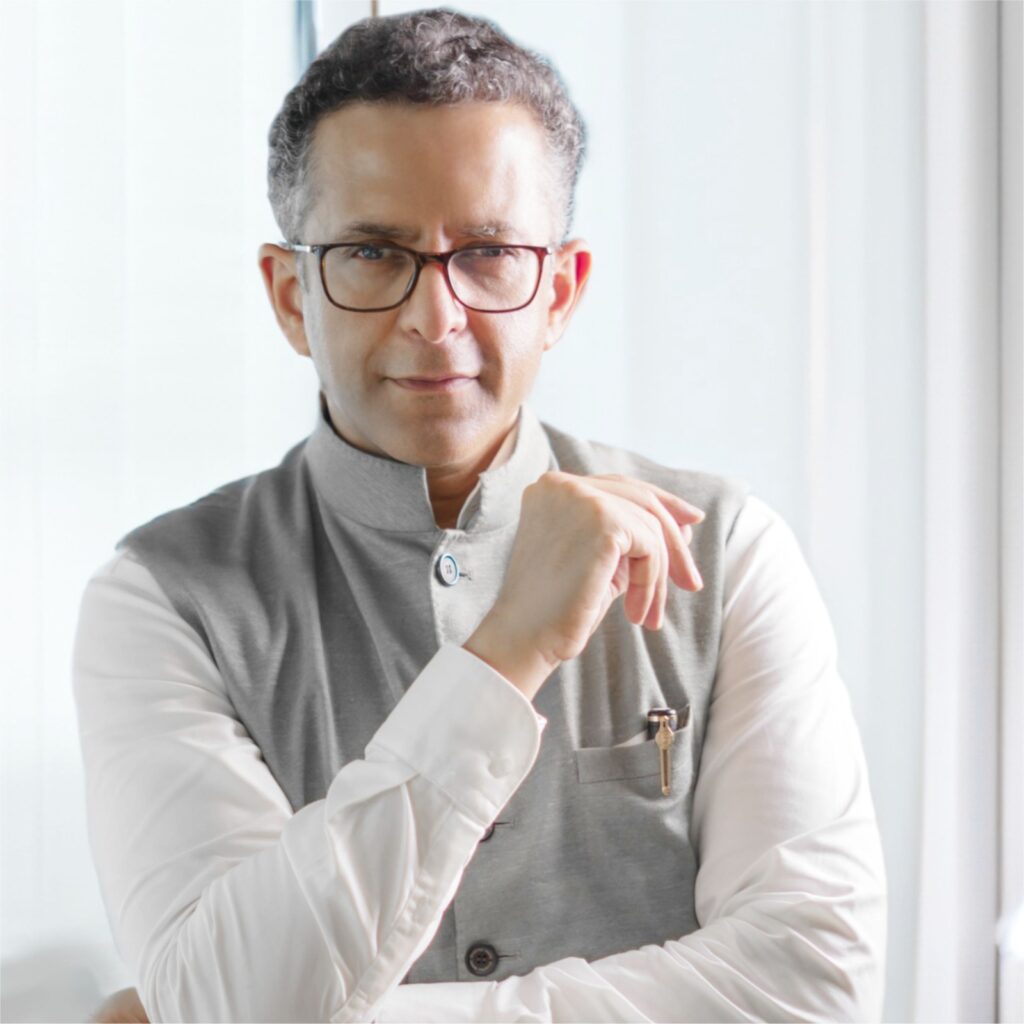
The article has been written by Gaurav Bhagat, Founder, Gaurav Bhagat Academy