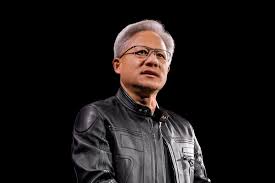
Jensen Huang, founder and CEO of NVIDIA, has received the 2026 IEEE Medal of Honor. IEEE is the world’s largest technical professional organization, which has over 500,000 associates across the world. The IEEE Medal of Honor is the organization’s highest accolade that comes along with a $2 million prize.
“The IEEE Medal of Honor represents the pinnacle of career achievement,” said Mary Ellen Randall, IEEE President. “Jensen Huang’s contributions have advanced the frontiers of technology and enabled innovations whose impact is yet to be imagined. IEEE is proud to honor work that not only defines excellence in our field, but inspires the next generation of engineers and technologists.”
Huang is being honoured for decades of transformative leadership and his foundational contributions to accelerated computing, a field that has been central to NVIDIA’s rise as a global technology powerhouse. The recognition adds to a growing list of accolades he has received in recent years, including the Queen Elizabeth Prize for Engineering, Financial Times and TIME Magazine’s Person of the Year, and the Professor Stephen Hawking Fellowship.
“Receiving the IEEE Medal of Honor is deeply humbling. This recognition reflects the life’s work of thousands of engineers and researchers at NVIDIA,” said Huang. “From the invention of the GPU to the engines of modern AI factories, we’ve helped ignite a new industrial revolution. This award belongs to the entire community that built the CUDA ecosystem, advanced computing beyond Moore’s Law, and continues to push the frontier of artificial intelligence. Together, we’re building an incredible future for our planet.”
Under Huang’s leadership, NVIDIA reached a historic milestone in October 2025, becoming the first company to surpass a $5 trillion market capitalisation. His role in introducing the world’s first graphics processing unit (GPU) in 1999 marked a turning point in computing, unlocking new possibilities across industries such as healthcare, engineering, robotics, autonomous mobility, manufacturing, and beyond. Huang’s early conviction in accelerated computing has since become a cornerstone of modern artificial intelligence, shaping what is widely seen as the next phase of the industrial and digital revolution.