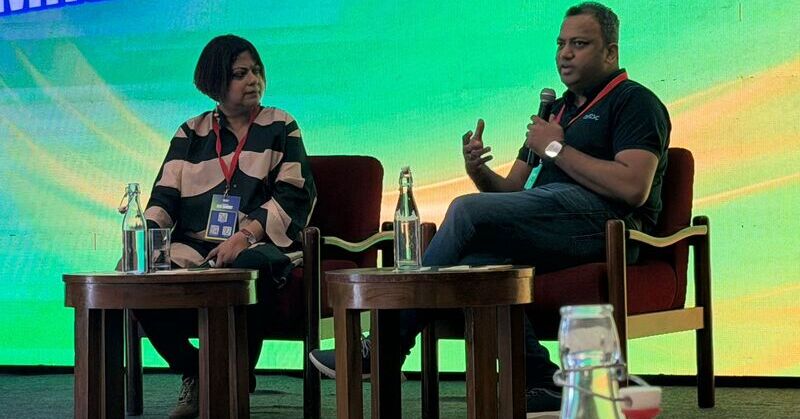
India’s Direct-to-Consumer (D2C) ecosystem is positioned for a fundamental transformation as the Open Network for Digital Commerce (ONDC) accelerates efforts to democratize digital commerce, reduce platform dependence, and unlock large-scale growth for emerging brands. These insights took center stage during a fireside chat on “The Future of D2C in an Open Commerce World” featuring Rohit Lohia, Chief Business Officer, Open Network for Digital Commerce (ONDC), in conversation with Paroma Roy Chowdhury, Partner, Spotlight at Aspire For Her, at the TiE Delhi-NCR D2C Summit – Edition 2. The session explored how ONDC is reshaping digital commerce architecture, empowering D2C brands, enabling cost efficiencies, and building a truly open, interoperable ecosystem that benefits startups, SMEs, and consumers alike.
How ONDC is Enabling Open, Inclusive and Scalable Commerce
Setting the context, Rohit Lohia explained that ONDC functions as a network enabler and ecosystem builder, rather than a conventional marketplace. “ONDC is an open network that lowers barriers to entry for new and emerging brands. It allows D2C startups to reach large consumer bases without incurring the high channel and commission costs typical of large e-commerce platforms,” he said.
Also read: Harish Bijoor Calls for a Strategic Reset in D2C Playbooks
Lohia highlighted that traditional platforms often impose 25% to 45% channel costs, while ONDC enables brands to operate at 8% to 10%, allowing them to offer better value to consumers and improve unit economics. “This fundamentally changes the viability of scaling for small and mid-sized brands,” he noted. ONDC currently spans multiple verticals, including retail, financial services, mobility, and transit. One of its earliest successes has been in digital-native sectors. Today, over 80% of metro ticketing across India is powered by ONDC, seamlessly integrated across platforms such as Google, WhatsApp, and Uber. In retail, ONDC is witnessing rapid acceleration. The network recorded 50% month-on-month growth in interoperable retail transactions between December and January, followed by another 50% growth in January-February, underlining the platform’s growing traction among consumers and merchants.
Powering D2C Growth Through Network Effects
For D2C brands, ONDC offers a powerful alternative to costly digital marketing and platform commissions. Lohia explained how early-stage founders often rely heavily on paid advertising and marketplace commissions, which quickly erode margins. ONDC, by contrast, enables brands to access multiple buyer-side applications through a single network integration, eliminating the need to manage multiple partnerships. “ONDC allows a brand to plug into one ecosystem and gain exposure across the network. This creates a powerful network effect, where businesses can scale faster without operational complexity,” Lohia said. Several network-native brands have already built their businesses entirely around ONDC, demonstrating the model’s potential. The platform is also unlocking opportunities in quick commerce, a segment where warehouse limitations often restrict access for smaller brands.
Scaling Adoption Through Partnerships and Government Support
Addressing adoption challenges, Lohia emphasized ONDC’s multi-pronged approach focused on service quality, merchant enablement, and ecosystem partnerships. Recent initiatives include brand quality programs, curated product strategies, and large-scale marketing campaigns such as the “Switzerland” campaign to drive awareness and discovery.
One of the most significant growth levers, he said, lies in unlocking large institutional demand pools, particularly through loyalty and reward catalogs linked to banking and financial services. “We are working with major loyalty platforms, where catalogs can drive millions of orders in short timeframes. This can become a massive accelerator for D2C brands,” he added.
ONDC also benefits from extensive government-backed ecosystem support. Lohia highlighted initiatives involving testing laboratories, logistics infrastructure, and marketing subsidies, especially for rural and semi-urban producers. A newly announced government scheme, with over Rs 27 crore earmarked, aims to support small producers transacting on ONDC, offering assistance across logistics, marketing, and order fulfillment.
AI, Agentic Commerce and the Next Wave of Digital Innovation
Artificial Intelligence emerged as a central theme of the discussion, with Lohia outlining how AI and agentic commercewill fundamentally reshape how consumers shop and brands operate. ONDC is currently developing DigiCatalog, a sovereign product catalog infrastructure, demonstrated in partnership with Google, that enables brands to validate claims, upload certifications, and build transparent product profiles. AI-powered catalog creation tools will allow sellers to generate complete product listings simply by uploading images.
Looking ahead, Lohia described a future where AI agents handle shopping decisions, learning consumer preferences and automating discovery, selection, and purchase. “Commerce will move towards agent-driven experiences, where intelligent assistants understand user preferences and deliver hyper-personalized recommendations,” he said.
Balancing AI Innovation with Data Privacy and Security
While AI unlocks massive potential, the conversation also addressed growing concerns around data privacy and digital security. Lohia noted that India’s evolving Digital Personal Data Protection (DPDP) framework will empower users with greater control over their personal data. He added that the future of AI is likely to move towards edge and device-based intelligence, where users maintain direct control over their data, ensuring both personalization and privacy. “Ex-computing, where models operate directly on personal devices, will help align innovation with privacy,” he said.