As India marks National Technology Day, technology leaders across sectors are emphasising on a common message: the next phase of India’s digital growth will be defined not just by faster innovation, but by how responsibly, sustainably, and inclusively that innovation is built and deployed. From AI-ready infrastructure and enterprise-grade governance to responsible AI adoption and digital inclusion, industry voices say India is entering a defining phase of its technology journey, which includes trust, resilience, and long-term impact will matter as much as innovation itself.

Pankaj Malik, CEO and Whole-time Director, Invenia-STL Networks, said, “The Digital India vision has laid a remarkable foundation connecting cities, towns, and gram panchayats. Yet, the next chapter demands infrastructure that is not just connected but intelligent. The AI-ready infrastructure of the future will be defined by high-density compute that can sustain large-scale model workloads, distributed edge architectures that reduce latency and bring intelligence closer to the point of action, and intelligent power management that treats energy as a strategic resource. Green data centres, built on advanced cooling, renewable integration, and energy-efficient design, will soon become baseline requirements. The future of technology will depend on how sustainably we power the intelligence we are creating.”

CP Gurnani, Co-Founder and Vice Chairman, AIONOS, said, “The true measure of technology lies in its impact on humanity. Responsible innovation today is about building trust as much as it is about building technology. As digital ecosystems expand, enterprises must prioritize secure, ethical and inclusive digital transformation. At AIONOS, we see innovation as a force that should empower businesses of all sizes, foster digital sovereignty and create equitable opportunities in a connected world. Growth is truly inclusive only when technology is designed with accountability, resilience and people at its core.”

Anku Jain, Managing Director, MediaTek India, said, “India’s technology landscape is rapidly transitioning from a cost-efficient IT services base to a high-value global innovation hub, with IT spending projected to exceed $176 billion. It has become a primary driver of inclusive growth, creating massive opportunities across the economy. We see a future where responsible innovation bridges the digital gap, ensuring that cutting-edge technology is both accessible and sustainable. At MediaTek, our vision is to power inclusive growth by enabling high-performance, energy-efficient technologies that reach billions, from smartphones to smart homes. By democratizing advanced technologies, we are enabling smarter lives and by focusing on responsible design, we continue to develop innovative technologies that are affordable and meaningful for users across both urban and rural India.”

SK Venkataraghavan, Director of Solutions and Services Group (SSG), Lenovo India, Lenovo, said, “This National Technology Day, we celebrate not just India’s technological legacy, but the momentum of a nation actively shaping the AI era. India is at a decisive point in its AI-led techade, which is moving faster and cutting deeper. The Lenovo CIO Playbook 2026 reveals that 99% of Indian enterprises plan to increase their AI investments over the next 12 months, with budgets growing at the fastest pace across Asia Pacific. That is not an incremental shift, it is a supercycle in motion. What makes this moment especially significant is the nature of the change: AI is no longer being piloted, it is being industrialized. Enterprises across manufacturing, retail, sports and other sectors are moving from experimentation to full-scale production, prioritizing real outcomes over proof-of-concepts. With nearly three dollars expected in return for every dollar invested, AI is fast becoming core business infrastructure. At Lenovo, our ‘Smarter AI for All’ vision is grounded in the commitment that this technology must be accessible, responsible, and outcome-driven, for every enterprise and every individual. Our full-stack Hybrid AI portfolio, including Lenovo Agentic AI and the Lenovo xIQ platform, delivers the end-to-end lifecycle capabilities enterprises need to build intelligent workflows, automate decisions, and achieve tangible operational results. With its engineering depth, expanding digital infrastructure, and a builder’s hunger for innovation, India is uniquely positioned to democratize AI for the real world as an architect of this shift. Lenovo is a committed partner in that journey.”

Rohit Srivastava, Senior Director of Engineering, MiQ, said, ”India’s technology moment is real – but its lasting value will be decided not by how fast we innovate, but by how responsibly we do so. As AI, automation, and digital platforms reshape industries at unprecedented pace, Indian businesses face a defining choice: treat responsibility as a compliance checkbox, or embrace it as the foundation of durable competitive advantage. At MiQ, this is the standard we hold ourselves to – building AI systems that are model-agnostic, transparent, and auditable by design across 17+ global markets. We believe this is a moment for the entire industry to rise together.
Responsible innovation means building intelligence that is free from bias and grounded in consent – not because regulators demand it, but because trust is the engine of long-term effectiveness. Whether it is an algorithm deciding which audience sees an ad, a lending model assessing credit risk, or an automation tool reshaping a supply chain, the same principle applies: a system that cannot explain its decisions is not just a reputational risk – it is a business risk. When AI is designed with fairness, data privacy, and accountability at its core, it does not constrain performance. It makes outcomes more durable, defensible, and effective.
Inclusive growth demands that we go further still. India’s greatest opportunity lies in ensuring that the intelligence we build serves Bharat, not just its metros. This means connecting data across fragmented, diverse markets – enabling vernacular access, bridging rural-urban connectivity gaps, and unlocking communities that have historically been underserved by digital infrastructure. Technology that ignores the margins ultimately fails the whole.
National Technology Day is a timely reminder that India’s most enduring innovations have always solved real problems for real people. The ethical standards and connected architectures we establish today are not guardrails that slow progress – they are the infrastructure on which a world-class, people-first technology future is built. Innovation that does not serve everyone, ultimately serves no one.”
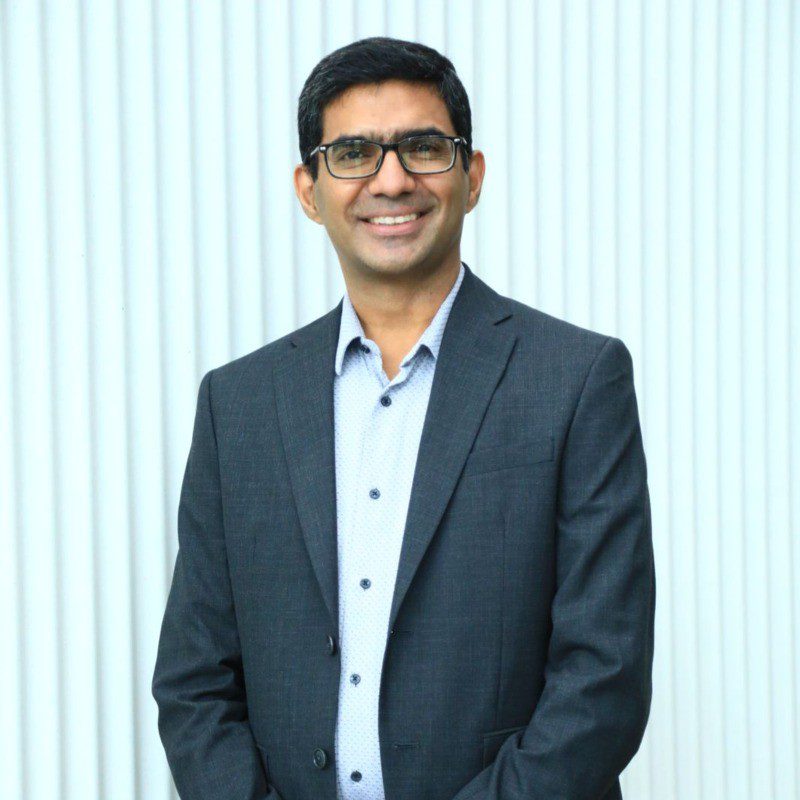
Prasad Panchagnula, MD and Chief Business Officer, Embark, said, “GCCs have moved decisively from AI experimentation to enterprise-scale adoption, with centres now investing in Agentic AI and a growing number establishing dedicated innovation teams to globalise ideas. That signals a clear shift in capability. However, capability alone does not equate to responsibility. As organisations scale AI, the real challenge is no longer deployment, but clarity and understanding where AI is creating measurable value, how it is being used across workflows, and whether it is being governed effectively. Responsible AI 2.0 demands transparency, governance, and ethical assurance through continuous validation and the ability to connect AI activity to business outcomes.
The most successful GCCs Today are moving towards hybrid agentic operating models, where human expertise and autonomous systems work in tandem. In these environments, human teams define strategic intent, establish guardrails, and ensure accountability, while AI drives execution at scale. Getting that balance right, across geographies, functions, and evolving use cases is where India’s GCCs are being truly tested.
At Embark, we believe responsible innovation must be engineered into the system from the outset. When we build GCCs, we integrate technology, governance, and measurement into a single operating framework as inclusive growth will not come from access to AI alone, but from the ability to scale it responsibly, transparently, and with clear impact.”
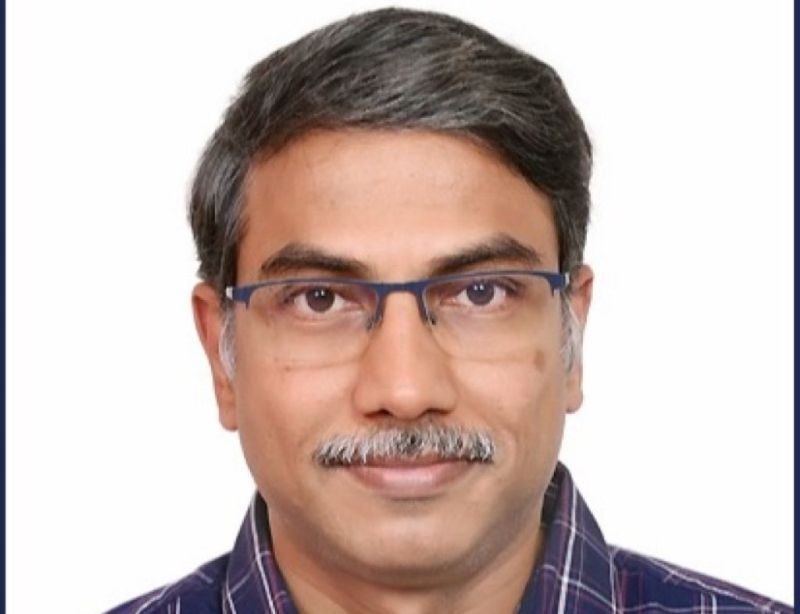
Sivakumar Ekambaram, India Site Leader, GoTo, said, “Responsible innovation is no longer about what we build, but who it truly reaches and enables. In a market as diverse as India, technology must be designed to include, not exclude. That calls for solutions that are simple to adopt, secure by design, and accessible to businesses at every stage of their digital journey.
At GoTo, we are seeing AI move from experimentation to everyday utility. When applied thoughtfully, AI can take on repetitive IT tasks, speed up issue resolution, and help teams stay focused on higher-value work. The real impact lies in making these capabilities intuitive and reliable, so they support both technical and non-technical users without adding complexity.
Cloud communications and IT support have become the foundation of distributed work. As organizations scale across locations, the focus must remain on reducing friction and strengthening trust. Inclusive growth will come from ensuring that advances in AI and cloud technology translate into tangible improvements in how people work, collaborate, and stay productive.”

Ranga Jagannath, Senior Director – Growth, Agora, said, “India’s digital ecosystem is entering a phase where responsiveness is becoming as important as reach. Whether it is a customer resolving a query instantly, a patient accessing remote consultation, or a user navigating services in their preferred language, expectations have shifted toward interactions that are immediate, reliable, and intuitive. AI is playing a central role in enabling this shift, but it also brings governance, security, and accountability into sharper focus as these systems become deeply embedded in everyday use.
The challenge is to ensure these systems work reliably and fairly at scale. Concerns around accuracy, bias, and misuse are becoming more visible, especially in a diverse environment where connectivity, device capability, and digital literacy vary widely. This makes it critical to build systems that are secure, transparent, and consistent in performance.
At Agora, we see Conversational and Voice AI becoming foundational to how people engage with businesses, services, and digital platforms. From enabling real-time multilingual interactions to powering intelligent, context-aware experiences that feel natural and intuitive, these technologies are reshaping communication at scale. Our real-time engagement and AI capabilities are designed with reliability, low latency, security, and trust at their core, ensuring meaningful and inclusive interactions across diverse user environments. On National Technology Day, it is important to recognise that technology delivers the greatest impact when it enhances human connection, expands accessibility, and works seamlessly for the people it is designed to serve.”

Deepak Dastrala, Chief Technology Officer, IntellectAI, Intellect Design Arena Ltd, said, “National Technology Day highlights the growing need for trusted, scalable innovation that delivers measurable business outcomes. As enterprises accelerate AI adoption, the industry is shifting from experimentation and pilots to Business Impact AI, in which organisations embed AI into core business operations to drive faster decision-making, operational resilience, compliance, and customer-centric growth.
For regulated industries, AI can no longer remain at the edge of the enterprise. It must operate safely, reliably, and measurably within existing systems, controls, and decision-making processes, with governance, auditability, and trust built in from the start. At Intellect, we believe the future of enterprise transformation will be driven by Business Impact AI. With the emergence of ‘Enterprise AI on Tap’ and platforms such as Purple Fabric, organisations now have access to judgment-centric, governance-ready AI capabilities that can be securely deployed at scale across critical enterprise workflows.
As AI adoption matures, trust, sovereignty, explainability, and compliance will become foundational to how enterprises build and operationalise AI. India’s innovation ecosystem is well-positioned to lead this transition by developing globally relevant, enterprise-grade AI solutions that combine responsible innovation with scalable, inclusive business impact. The next phase of growth will belong to organisations that can operationalise trusted AI with speed, intelligence, and purpose.”

Anuradha Natarajan, Head of Technology Strategy and Engineering Operations, Altimetrik, said, “AI is emerging as the next defining layer of India’s technology journey, moving beyond experimentation to actively shaping decisions, operations, and outcomes at scale. As the country builds on its legacy of large-scale digital innovation, this shift marks a transition from enabling access to driving intelligent, real-time impact across industries.
However, with AI influencing areas such as finance, healthcare, and public services, the risks are becoming more consequential. Gaps in governance, data quality, and security are no longer technical limitations but systemic challenges that can impact trust, fairness, and resilience. Many organizations Today are accelerating AI adoption without fully addressing accountability, creating blind spots around bias, explainability, and control.
Addressing this requires a fundamental reset. AI must be built with strong data foundations, transparent decision-making, and secure-by-design architectures. Equally important is ensuring inclusivity, designing systems that work across diverse populations and do not deepen existing divides.
At Altimetrik, the focus is on helping enterprises industrialize AI responsibly by embedding governance, risk management, and engineering discipline into every stage of the lifecycle, enabling scale without compromising trust.
On National Technology Day, as we reflect on the theme ‘Responsible Innovation for Inclusive Growth,’ the opportunity ahead lies in shaping AI that is not only transformative, but also accountable, inclusive, and built to deliver sustainable impact at scale.”

Vasanthi Ramesh, Vice President of Engineering and Site Leader, NetApp India, said, “Every technological leap in history has been preceded by an infrastructure revolution, and AI is no different. But here is what we observe on the ground: organizations are not failing at AI because they lack ambition or talent. They are failing because their data infrastructure was never built for this moment. Fragmented storage, siloed environments, and governance frameworks designed for a pre-AI world are the real blockers, and they are far more common than the industry likes to admit.
At NetApp, we have defined what AI-ready infrastructure actually demands: data that is unified across every environment, performance that scales without compromise, and governance that earns trust at the enterprise level. These are not aspirations on a roadmap, they are engineering principles we bring to every deployment, every conversation, every customer challenge we solve. The organizations that will lead the AI decade are not waiting for better models. They are the ones fixing the foundation today. The AI era will be won not just by those who write the best models, but by those who build the most dependable ground beneath them.”

Chaitali Moitra, Regional Director – South Asia, Turnitin, said, “On National Technology Day, we are reminded that technology’s greatest promise lies not in what it can do for us, but in what it enables us to learn and become. At Turnitin, we believe that the most meaningful application of technology in education is one that strengthens the relationship between students and their own thinking. As generative AI becomes an increasingly present force in classrooms and institutions across India and the world, the opportunity before us is not to resist this shift, but to shape it responsibly. The future of education lies in fostering integrity, critical thinking, and human creativity where AI augments curiosity, not replaces it.”

Sudiptaa Paul Choudhury CMO at QNu Labs, said: “National Technology Day is a reminder that sovereign innovation, indigenous technologies, and secure digital infrastructure will define India’s next decade of economic and technological leadership. As India accelerates toward becoming a global digital economy, technologies such as AI, quantum computing, cybersecurity, semiconductors, and deep-tech innovation are becoming the foundation of national growth and resilience. Today, every email, financial transaction, and government secret relies on digital encryption. But the rise of agentic AI, Mythos AI, and quantum computing is rapidly reshaping cybersecurity, exposing the limitations of traditional encryption and accelerating next-generation cyber threats. India’s digital future must therefore be built not only on innovation, but also on trust, sovereignty, and quantum-resilient security infrastructure capable of defending against AI- and quantum-driven attacks. India is one of the global leaders in quantum communications and sovereign quantum-safe technologies designed to protect critical infrastructure, defence networks, financial systems, healthcare ecosystems, and citizen data. At QNu Labs (world’s only full-stack sovereign quantum cybersecurity company), our vision is to become the Global Trust Platform for the AI and Quantum-Safe Future through indigenous, unified quantum security technologies combining quantum physics and advanced mathematics designed in India, built for the world.”

Prakash Thekkatte , Senior Vice President – Software Engineering, India, Salesforce, said “Technology without values becomes a race to the bottom. As we observe National Technology Day 2026, we must recognise that India’s ‘techade’ is not just about accelerating GDP, it is a reflection of our national character. We are now in the era of agentic AI, where technology moves beyond assisting to actively taking decisions and actions. This shift demands a new social contract. When innovation concentrates power, it ceases to be progress and instead deepens inequality. In a Viksit Bharat, 1.4 billion citizens should not be passive participants in the AI revolution, but active creators shaping it. True self-reliance lies in evolving from a nation of users to a nation of builders. At Salesforce, we believe that skill is sovereignty, and this belief underpins our vision for AI. Our focus is on ensuring that AI acts as a force for inclusion, empowering every young Indian to innovate and shape their own future. This vision is anchored in trust, which will define the AI era. The systems we build must be not only powerful, but also responsible, equitable, and accountable, because true progress is measured by how widely opportunity is shared. This is India’s moment, not just to lead in AI, but to set the benchmark for responsible and inclusive leadership in the AI era.”

Balaji Rao, Area Vice President, India & SAARC, Commvault, added: “As innovation accelerates across AI, digital infrastructure, and advanced computing, National Technology Day reinforces the growing importance of resilience and trust in shaping sustainable progress. Organizations today are navigating an increasingly complex digital landscape, where modernization efforts must be supported by strong foundations of data integrity, governance, and cyber resilience to deliver secure, reliable, and long-term outcomes.
In this environment, advancement and resilience must go hand in hand. Building future-ready digital ecosystems requires systems that are secure, transparent, and recoverable by design, supported by a unified approach where data protection, cyber recovery, and identity resilience work together to ensure continuity and confidence, even in the face of disruption. This becomes especially important in a diverse and rapidly digitizing market like India, where inclusive growth depends on the reliability and trustworthiness of digital ecosystems. At Commvault, we see resilience as a foundational enabler of responsible innovation, helping organizations protect what matters, recover quickly, and scale technology with confidence while ensuring that progress remains both inclusive and sustainable.”