Medicine is a race against the clock. A tumour caught at screening is a different disease from the same tumour found two years later, and a brain bleed read in minutes is a different emergency from one read in hours. The most valuable thing AI can add to healthcare is not cleverness. It is time. The gap is large. WHO estimates that 10.7 million people fell ill with TB in 2024, yet only 8.3 million were detected and notified, leaving 2.4 million unfound. India alone accounts for about one in four cases worldwide. Every missed case is a person who gets sicker, and an infection that keeps spreading. This is why predictive healthcare is important.
What “predictive healthcare” really means
In practice, healthcare AI does three jobs. It finds: it spots a finding a tired eye might miss. It ranks: it decides which of hundreds of waiting studies a radiologist should open first. And it anticipates: it estimates who is likely to become unwell. The first two are the most mature, and imaging is where they live. The FDA’s list of AI-enabled devices had reached 1,614 entries by its September 2026 update, with radiology accounting for about 76% of them. Maturity, though, is not proof. An analysis of FDA-listed devices found that fewer than 1% reported actual patient health outcomes. The industry has built plenty of algorithms and measured far fewer results.
The evidence that does exist
The strongest evidence so far comes from breast screening. Sweden’s MASAI trial involved more than 100,000 women randomised to AI-supported mammography or standard double reading. An earlier analysis found 29% more cancers detected without more false positives. The full results show 12% fewer cancer diagnoses in the years after screening, and an earlier safety analysis found a 44% reduction in radiologists’ reading workload. The authors were careful: their study does not support replacing healthcare professionals, because AI-supported screening still requires at least one human reader. That is the right way forward. AI’s best role is to extend scarce specialists, not to substitute for them.
A case study in minutes: brain haemorrhageA case study in minutes: brain haemorrhage
At mlHealth360, we think about this problem in minutes. Scaida BrainCT-ICH is FDA 510(k) cleared for computer-assisted triage and notification of suspected intracranial haemorrhage on non-contrast head CT in adults aged 22 and above. It reads each scan as it arrives, flags suspected bleeds and notifies the radiologist’s worklist so those studies can be reviewed sooner.
Also read: The New Frontier of Preventive Healthcare
What we have learnt is that accuracy alone is the wrong yardstick. In our white paper, a hypothetical population with 4.5% haemorrhage prevalence would generate about 147 flags per 1,000 studies at the reported sensitivity and specificity, 39 of them true, while six haemorrhages would remain unflagged. Two principles follow. A flag is only valuable if it changes who is seen first, so hospitals should measure time to review, not predictive value alone. An absent flag must never lower a study’s priority. The software speaks up early; it never clears anyone.
Why this matters most in India and emerging markets
Triage tools matter most where specialists are scarcest and disease burden is heaviest. ICMR registry data, shows that one in seven stroke patients in India is under 45. Stroke and TB share a feature: earlier detection changes the outcome, and a delayed read is costly. AI that prioritises the urgent and screens the silent can help achieve more with the specialists you have. That is the thinking behind Orion CXR. It reads a standard chest X-ray for 17 findings, flags them for a qualified reader and drafts the report.
What responsible deployment requires
Technology alone does not create impact. Three things separate pilots from lasting change.
Integration. AI that sits outside the radiology workflow gets ignored. Ours handles orders and results through HL7 messaging, and works with HIS, PACS and FHIR-based systems.
Privacy by design. India’s Digital Personal Data Protection Act and Rules raise the bar on consent, security and breach reporting. Hospitals need partners that treat privacy as a default. Our imaging workflow begins with data ingestion and anonymisation, and our clinical products are deployed under separate agreements with healthcare organisations, which govern any data they process.
Human accountability. Our tools are assistive and do not diagnose; a qualified clinician reviews every study.
Before adopting any predictive tool, hospitals should ask three questions. How was it validated on patients like mine? What happens when it is silent or wrong? And how will we measure the time it saves?
The road ahead
The next wave of predictive healthcare will move beyond single findings towards risk across conditions, combining imaging with records and functional measures. Our partnership with NeuroCatch points that way: it pairs CT imaging with rapid brain-function measurement, connecting what the brain looks like with how it performs. But the test will stay the same for every advance: does it get the right patient in front of the right clinician sooner? If it does, it is prevention in practice. If it does not, it is a demonstration.
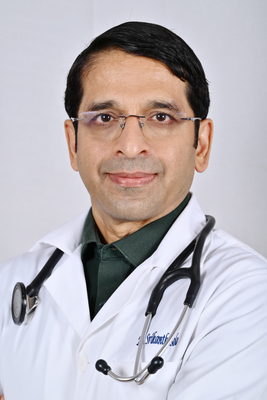
The article has been written by Dr. Srikanth Sola, Chief Medical Officer, mlHealth360