Deeptech investors are putting larger sums behind technologies that could reshape industries, from semiconductor design and space technology to advanced robotics and new materials. These businesses can solve problems that existing technologies struggle to address, and their intellectual property often requires years of research and specialised expertise to develop.
India’s funding numbers reflect this growing interest. However, larger cheques bring greater expectations. A successful technical demonstration does not guarantee paying customers, and a substantial funding round does not automatically translate into a valuable business. The challenge is to turn scientific progress into a product that can find a market, scale commercially, and eventually deliver returns to investors.
From scientific promise to commercial potential
A startup developing a new battery chemistry or chip design may spend years proving that its technology works reliably outside a laboratory. Investors therefore need to examine technical progress alongside the commercial opportunity. Technology Readiness Levels, measured on a scale from TRL 1 to TRL 9, help assess how far a technology has progressed from early scientific research to demonstrated operational use. However, a high readiness level does not automatically mean that a product has a viable market.
Also read: India’s Series A Bottleneck, The DeepTech Funding Gap
Physical products bring engineering, scalability, and commercialisation risks that investors must assess throughout a company’s development. The investment decision must consider not only whether the technology can be built, but whether it can become a repeatable business.
The customer must see enough value to pay
A technology can outperform existing alternatives and still struggle to generate returns for its investors. The reason is simple: customers pay for a problem to be solved at a cost they can justify. Consider a startup developing an industrial cooling system that promises to lower electricity consumption. A factory may welcome the prospect of lower energy bills, but the purchase decision will also involve installation costs, maintenance, compatibility with existing equipment, and the time required to recover the investment. If the system saves money over five years but requires expensive modifications today, the customer may postpone the purchase.
This creates a direct link between product design and financial performance for the startups. A solution that delivers measurable savings, works with existing equipment, and can be installed without interrupting operations is easier to sell. It may also require less support after installation, allowing the company to serve more customers without increasing costs at the same rate.
Revenue matters, but the quality of revenue matters more
The first commercial sale is a significant milestone for a deeptech startup, but it does not prove that the business can generate attractive returns. Imagine a robotics startup sells its first industrial system for Rs 40 lakh. Developing and manufacturing that system costs Rs 32 lakh, leaving Rs 8 lakh before sales, installation, research, administration, and other operating expenses. The company has made a sale, but its economics may still be too weak to support growth.
Deeptech startups take 35% longer than conventional technology startups to grow revenue from $1 million to $5 million and consume 48% more funding by the time they reach $5 million in revenue. This is why investors must plan for longer timelines and higher capital requirements.
Early production may be expensive because the company has not yet reached efficient manufacturing volumes. That can improve with scale, provided the underlying production process is reliable, and customer demand is sufficient. Investors should look for evidence that costs can fall as sales increase rather than assume that greater volume will automatically improve profitability. Investors can also share the funding burden through syndicates involving specialist venture funds, corporate investors and other institutions. Corporate partners may bring more than money. They can provide access to testing facilities, manufacturing expertise and potential customers.
Choosing the right capital for each stage
Raising equity for every expense can leave founders and early investors with significantly smaller ownership stakes after successive funding rounds. A more sustainable approach is to match each funding source to the company’s needs and ability to repay. Research grants and eligible subsidies can support early development without diluting ownership. Venture equity can finance uncertain research, specialised talent and business expansion. Once a startup has suitable assets, reliable orders or predictable cash flows, equipment leasing, debt or project financing may help fund production.
Early-stage businesses may lack the revenue or collateral required by lenders, and debt repayments can create additional pressure. The funding decision must reflect the company’s financial position rather than an assumption that machinery should always be financed through borrowing.
India’s Rs 1 lakh crore Research, Development and Innovation scheme offers another route for eligible technology businesses. The official RDI Fund guidelines provide for long-term, low-interest loans and selected equity financing, as well as contributions to relevant funds. The scheme does not provide grants or short-term loans, and companies must approach designated fund managers rather than apply directly to the government for project funding. Long-term capital can help companies bridge the distance between research and commercialisation, but the terms must fit the business’s development cycle and repayment capacity.
The return depends on how much more capital the company needs
Suppose an investor puts Rs 10 crore into a startup for a 20% stake. The company later raises additional funding, reducing the investor’s ownership to 12%. If the startup is eventually valued at Rs 500 crore in a sale, the investor’s 12% holding would represent Rs 60 crore on a simple proportional basis. That is six times the original investment before transaction costs, taxes, shareholder preferences, and the effect of time.
However, the outcome depends on how much additional capital the company needs and on what terms it raises it. If commercial production repeatedly costs more than expected, the startup may have to raise more money than originally planned. Existing shareholders could be diluted further, or the company could struggle to finance the next stage. Investors must therefore assess capital efficiency from the beginning. The objective is not to minimise spending at any cost. Underinvestment can delay testing, compromise product quality or leave a company unable to fulfil orders. The aim is to ensure that each major investment creates a clear improvement in the company’s commercial position.
Growth must eventually reduce dependence on fresh funding
A deeptech business cannot rely indefinitely on investors to finance the gap between expenditure and revenue. At some point, its commercial operations must begin supporting a larger share of its costs. This does not mean every company needs to become profitable immediately. A semiconductor manufacturer building a production facility will have a different financial profile from a robotics company selling systems to factories. Both, however, need a credible explanation of how their funding requirements will evolve as the business grows.
The investors need to understand the distinction between revenue growth and financial progress, which is crucial. A company may report rising sales while continuing to spend heavily on each deployment, carry large inventories, or wait months for customers to pay. Another company with slower revenue growth may be improving margins, collecting payments faster, and generating more value from each additional order. The second business may be building a stronger foundation for future returns, even if its headline growth appears less impressive.
Deeptech investors should pay attention to cash flow, working capital, and the cost of expanding production alongside revenue. They also need to understand whether the company can finance growth through operating income, strategic partnerships, or suitable external capital without repeatedly weakening existing shareholders’ positions.
A valuable company still needs a route to investor returns
Even when a startup develops a commercially successful product, investors need a way to realise the value of their ownership. A company’s valuation on paper does not return money to its shareholders. Returns materialise when investors can sell their shares, receive proceeds from an acquisition or access liquidity through another transaction.
A public listing or a secondary share sale may offer other routes, subject to market conditions, investor demand and the company’s readiness. Founders and investors should consider these possibilities without treating any one of them as guaranteed. The ownership structure also matters at the point of exit. An acquisition price of Rs 500 crore does not necessarily mean every shareholder receives proceeds in direct proportion to their stake. Outstanding debt, liquidation preferences and the terms of the transaction can affect the amount available for distribution.
Investors must consider the likely exit value against the total capital invested, the ownership they retain and the time taken to realise the return. A breakthrough creates an opportunity, but customers must be willing to pay for it, the business must deliver it at viable economics, and the company must reach a position where its value can be realised. Bigger cheques create room for bigger ambitions. Delivering returns requires evidence that each additional rupee invested brings the business closer to sustainable earnings and a credible outcome for its shareholders.
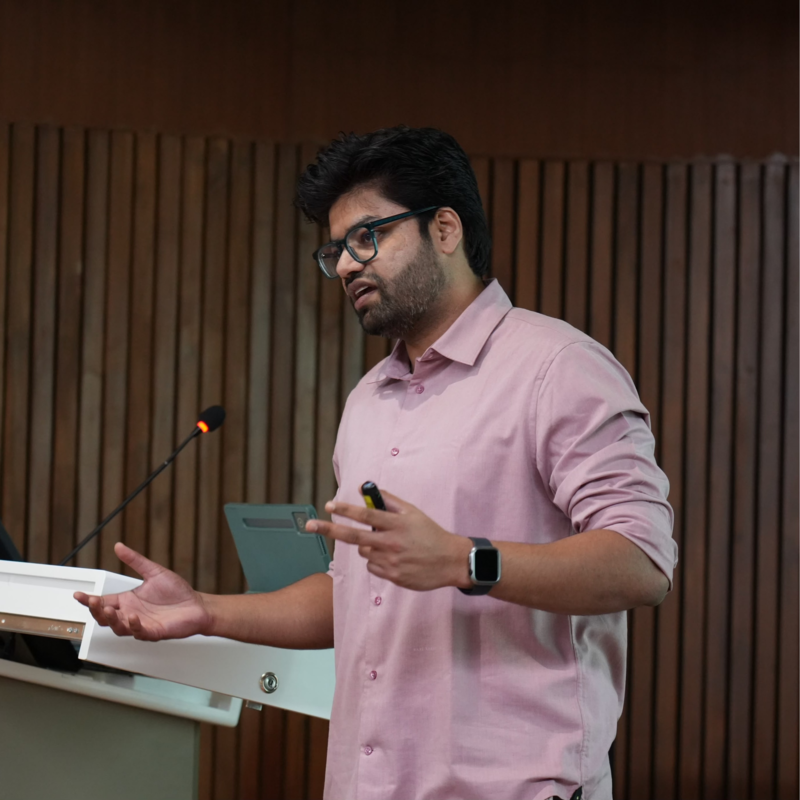
The article has been written by Ashutosh Srivastava, VP – Investments at SanchiConnect