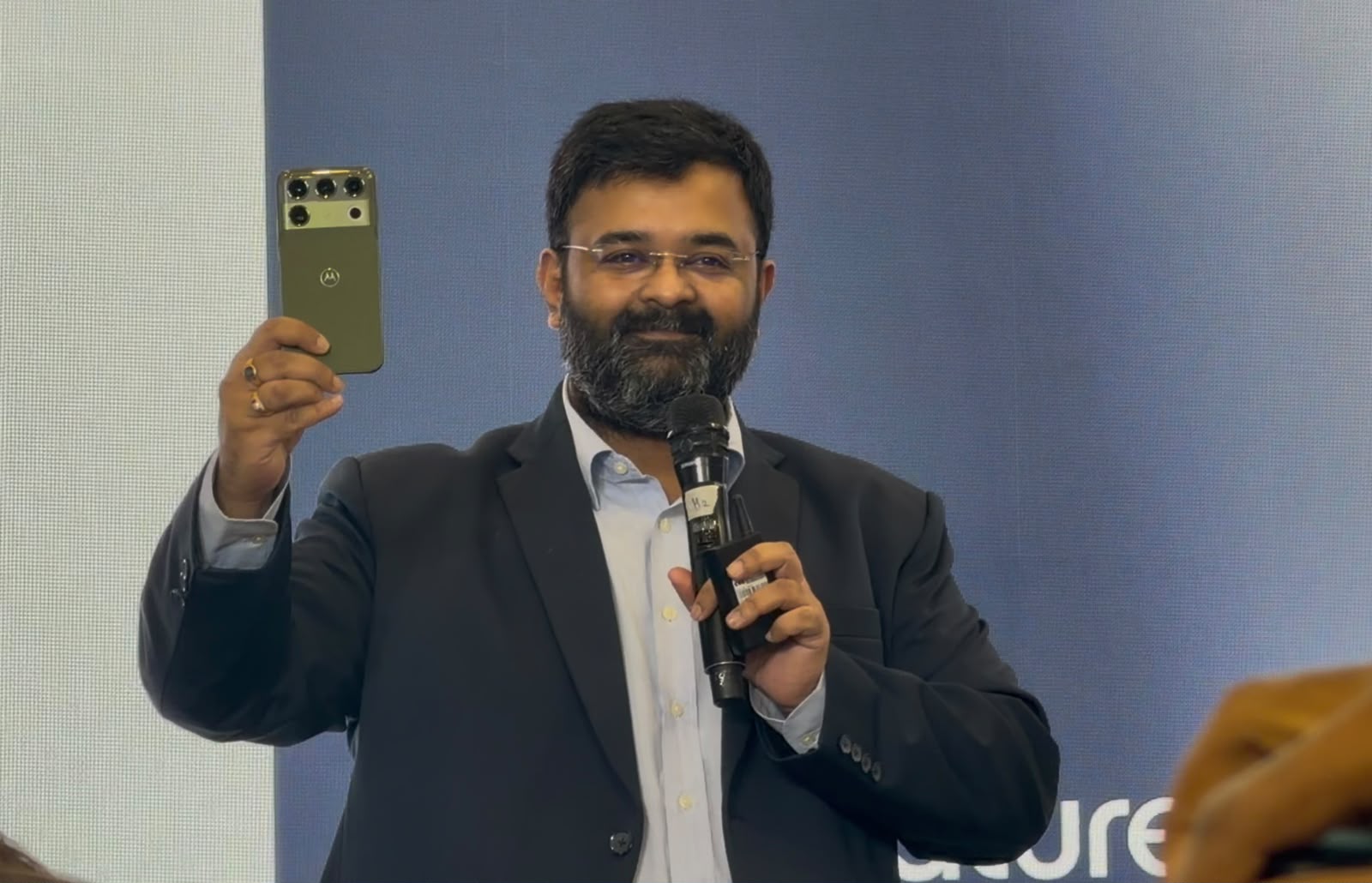
Motorola has unveiled the Motorola Signature 27 at Snapdragon Day during the 10th edition of India Mobile Congress (IMC) 2026, showcasing its next-generation flagship smartphone with a focus on on-device artificial intelligence (AI), professional-grade imaging, premium design and immersive audio. The smartphone is expected to launch in India soon. Powered by Qualcomm’s Snapdragon 8 Elite Extreme Gen 6 platform, the Motorola Signature 27 is positioned as a flagship device that combines high-performance computing with AI-led experiences and advanced camera capabilities. Motorola has also announced seven years of operating system (OS) upgrades and security patches for the smartphone, signalling a long-term software support commitment for its premium portfolio.
Also read: Qualcomm Showcases Upcoming Devices Powered by Snapdragon 8 Elite Platforms at IMC 2026
A key highlight of the announcement is Motorola’s emphasis on making AI more contextual and action-oriented, moving beyond conventional smartphone assistance towards experiences that can understand user intent and help execute everyday tasks. The company also highlighted its imaging technology, enhanced connectivity, redesigned exterior and an audio partnership with Bang & Olufsen.
Shivam Ranjan, Head of Marketing, APAC, Motorola, said the company’s collaboration with Qualcomm Technologies continues to be central to its efforts to bring advanced AI capabilities to consumers. “At Motorola, we believe the next era of mobile innovation will be driven by AI that is increasingly personal, contextual and proactive, delivered through seamlessly connected experiences. Our longstanding collaboration with Qualcomm Technologies continues to play a critical role in bringing these advancements to consumers. As one of the world’s first smartphones powered by the Snapdragon® 8 Elite Extreme Gen 6 platform, the Motorola Signature 27 showcases how breakthrough AI experiences, professional-grade imaging, iconic design, and immersive entertainment can come together to create a truly differentiated flagship experience. Together with Qualcomm Technologies, Motorola remains committed to shaping a future where smartphones evolve from connected devices into truly intelligent companions,” he said.
Key features of Motorola Signature 27
The Motorola Signature 27 brings together several areas of flagship smartphone development, with AI and imaging at the centre of its proposition.
- Processor: Snapdragon 8 Elite Extreme Gen 6 platform.
- AI capabilities: AI-assisted content creation, contextual experiences and the potential to move from user intent to task execution.
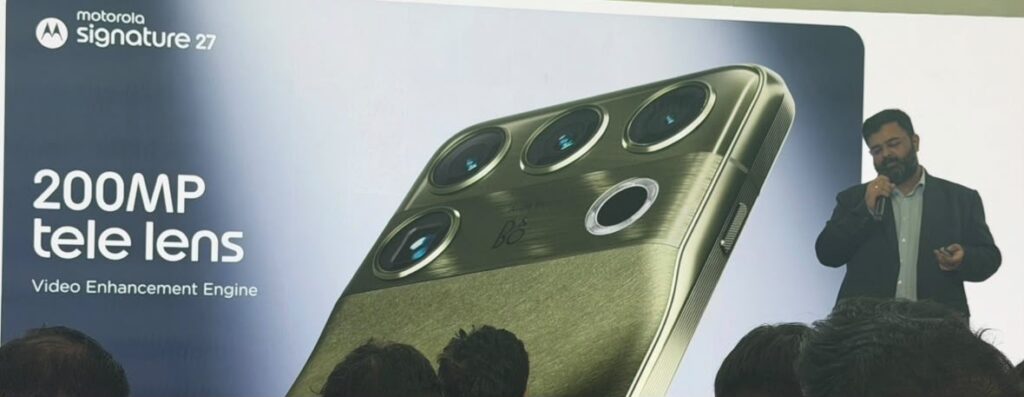
- Camera technology: A 50-megapixel Sony LYTIA sensor and a 200-megapixel camera system, supported by AI-led image processing.
- Real-time video optimisation: AI-based scene recognition and optimisation of colour, brightness, sharpness and detail during video recording.
- Software support: Seven years of OS upgrades and security patches.
- Connectivity: Six-antenna technology, with Motorola claiming up to 25% higher download speeds.
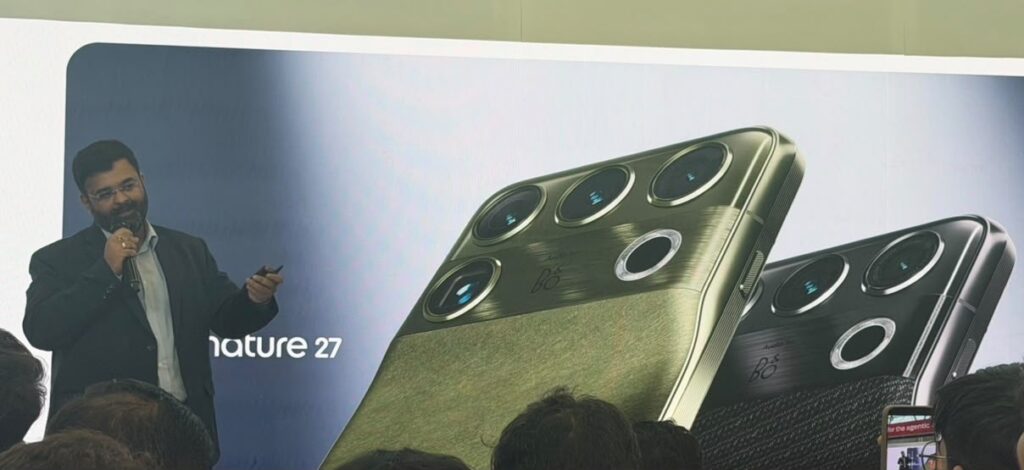
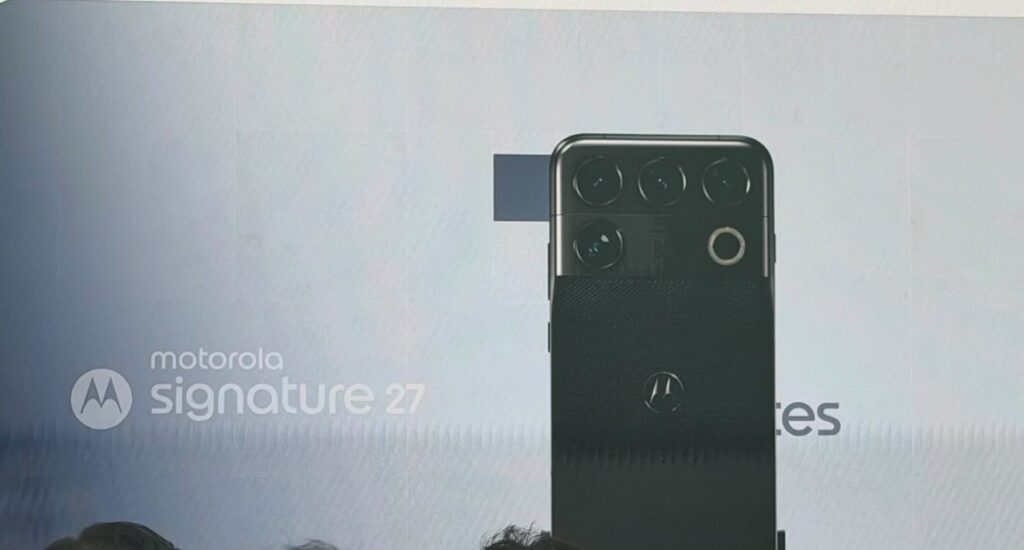
- Design: An aluminium silhouette with contoured edges, a premium finish and a camera module combining ceramic and brushed aluminium.
- Colour options showcased: Charcoal Smoke and Green.
- Audio: Motorola says the smartphone will be the world’s first and only smartphone to feature Bang & Olufsen audio.
Motorola has not yet announced the complete India pricing, sale date or retail availability details in the information shared at the unveiling.
AI moves beyond assistance towards action
Motorola’s presentation placed AI at the core of the Signature 27’s flagship experience. The company’s approach centres on combining processing capabilities on the device with cloud-based AI services to deliver more responsive and context-aware experiences. During the presentation, Motorola highlighted creative applications that can help users generate advanced videos, soundtracks and lyrics. The company also discussed the expanding role of Google’s Gemini ecosystem, with the potential for AI to connect user intent with actions across applications and services.
For instance, a user planning a celebration, a dinner with a colleague or a visit to another country could eventually use AI to coordinate multiple steps, including restaurant reservations and travel-related arrangements. Such capabilities are intended to reduce the need to move manually between applications. The company also expressed the importance of connectivity in delivering these experiences. As AI workloads increasingly span on-device processing and cloud services, reliable connectivity and faster data transfer become important to the overall user experience. Motorola said the Signature 27 incorporates six antennas for the first time in one of its devices, claiming up to 25% higher download speeds. According to the company, this is intended to support better connectivity and faster access to cloud-based AI processing.
Camera and imaging take centre stage
Imaging is another major focus of the Motorola Signature 27, with Motorola building on the camera capabilities introduced with the previous Signature-series smartphone. The company said the new device combines advanced camera hardware with the image signal processing and neural processing capabilities of the Snapdragon platform. This allows AI models to analyse scenes and optimise image output in real time.
During video recording, the system is designed to recognise scenes and adjust parameters such as colour, brightness, sharpness and detail. The objective is to deliver more consistent footage without requiring users to make extensive manual adjustments. The imaging system includes a 50-megapixel Sony LYTIA sensor alongside a 200-megapixel camera system, according to the presentation. Motorola’s emphasis is not limited to sensor resolution; it also centres on how AI processing and the chipset’s imaging capabilities work together to improve the final output.
Real-time scene analysis could be particularly relevant for users recording videos in changing lighting conditions or capturing a variety of subjects. However, the final assessment of image quality will depend on the complete camera configuration, including lens specifications, sensor implementation and performance across different shooting conditions. The company has positioned the Signature 27’s imaging capabilities as a combination of premium hardware and computational photography rather than relying on megapixel counts alone.
Premium design with a new material language
Motorola has also introduced a refreshed design for the Signature 27, distinguishing it from its predecessor through a new exterior treatment and material choices. The smartphone features an aluminium silhouette with contoured edges, intended to create a sleek and premium appearance. The camera module combines ceramic and brushed aluminium, adding another material contrast to the design.
Motorola showcased the device in Charcoal Smoke and Green finishes, each intended to convey a different design character. Charcoal Smoke emphasises an engineering-led aesthetic, while Green is positioned around elegance and refinement. The design approach reflects the company’s attempt to differentiate the Signature series through a combination of materials, finishes and detailing, alongside its focus on performance and imaging.
Seven years of software and security support
One of the more significant announcements is Motorola’s commitment to provide seven years of OS upgrades and security patches for the Signature 27. Extended software support can improve the long-term value of a premium smartphone by keeping it updated with newer operating system capabilities and security protections over a longer period. It also addresses a growing consideration among consumers purchasing flagship devices at higher price points: how long the smartphone will remain supported after purchase. Motorola’s announcement places software longevity alongside processing power, imaging and design as part of its flagship proposition. The company has not, in the information shared here, specified the precise version-by-version upgrade schedule. Motorola also announced a collaboration with Bang & Olufsen for the Signature 27, describing the device as the world’s first and only smartphone to feature Bang & Olufsen audio.
The announcement adds an audio-focused dimension to the phone’s premium positioning, complementing its AI features, camera system and entertainment capabilities. Further technical details about the audio implementation, including speaker configuration and specific tuning features, were not provided in the presentation transcript. These details will be important in assessing how the partnership translates into the listening experience. Explaining the thinking behind the Signature series, Motorola said its premium smartphone strategy is centred on combining innovation with practical, everyday consumer experiences.
The company described the Signature 27 as its best smartphone, highlighting the integration of advanced processing, AI, imaging, connectivity and design in a single device. The focus, according to Motorola, is on ensuring that technological advancements deliver benefits that consumers can experience in daily use. The launch also reflects the continuing collaboration between Motorola and Qualcomm Technologies as smartphone manufacturers look to use increasingly powerful chipsets to support computational photography, generative AI and more sophisticated on-device experiences.
What the Motorola Signature 27 means for the Indian market
The Motorola Signature 27 enters the premium smartphone conversation at a time when manufacturers are increasingly differentiating flagship devices through AI integration, computational photography, longer software support and partnerships focused on design and entertainment. Its combination of a new Snapdragon platform, high-resolution camera hardware, real-time AI imaging, six-antenna connectivity and a seven-year software support commitment gives Motorola several areas on which to build its premium positioning.
The practical value of these capabilities will ultimately depend on factors such as camera performance in real-world conditions, the availability of AI features in India, software update delivery, battery life, pricing and after-sales support. With the device unveiled at Snapdragon Day during IMC 2026, Motorola has outlined its direction for the next generation of its Signature flagship range. The company is expected to share further details about the India launch, including pricing and availability, closer to the commercial release.