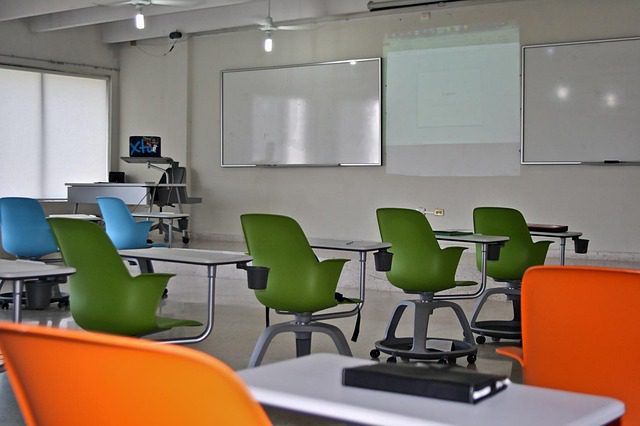
Walk into a classroom today, anywhere from a bustling city school to a quiet campus in a small town, and you’ll probably notice something that simply wasn’t there a decade ago: a digital board lighting up with a 3D diagram, a teacher pulling up a short video mid-lesson, students following along on a screen instead of squinting at a blackboard from the back row. Smart classrooms have moved well past being a novelty; they’re becoming something schools genuinely build their teaching around. And the more interesting question now isn’t whether they’re useful; it’s just how central they’ve quietly become to modern learning.
A Nationwide Shift That’s Genuinely Gathering Pace
The scale of this shift across India is honestly worth pausing on. Government data shows that over 1.49 lakh schools have now been covered under ICT initiatives, with 1.76 lakh smart classrooms and 1.79 lakh ICT labs sanctioned nationwide. Operation Digital Board, launched back in 2019 with the goal of setting up at least two digital classrooms in every school, has by 2026 reached nearly the entire country, bringing digital boards, projectors, and internet-enabled teaching content to millions of students who once learned purely through blackboards and textbooks. This isn’t some scattered, occasional upgrade here and there; it’s a genuinely nationwide shift in how classrooms are equipped, happening at a scale that would have felt hard to imagine just a few years back.
Also read: Making AI India’s Great Equaliser: From Policy Vision to Classroom Transformation
Delhi’s own commitment reflects this same energy closer to the ground, with plans for 7,000 smart classrooms, 175 digital libraries, and 100 A.P.J. Abdul Kalam language labs, a genuinely transformative step meant to make sure students from every background get access to the same modern, interactive education, no matter which part of the city they call home.
Why Interactive Learning Genuinely Helps Students Understand Better
What makes smart classrooms so valuable isn’t really the hardware itself; it’s what that hardware quietly lets a teacher do. Simulations and 3D visuals are helping students grasp subjects like science, mathematics, and social studies with a clarity a static textbook page simply can’t offer. A tricky concept, planetary motion, cell division, a tough geometric proof, becomes something students can actually watch unfold, rather than something they have to purely picture in their heads. This visual, interactive layer complements a teacher’s explanation beautifully, giving abstract ideas a shape students can actually hold onto.
Bridging the Distance Between Rural and Urban Classrooms
One of the loveliest outcomes of this whole shift is how it’s narrowing gaps that have existed for a long, long time. A key goal of Operation Digital Board has been making sure rural schools get the same modern teaching materials as their city counterparts, and honestly, that ambition is genuinely being realised. Digital classrooms also come with multilingual content built in, helping students learn in the language they’re actually most comfortable thinking in, which matters enormously in a country as linguistically rich as India. Interestingly, recent trends show Tier 2 and Tier 3 schools adopting these tools even faster than metro schools, quietly flipping the old assumption that big cities always lead the way when it comes to new technology.
Teachers Remain Genuinely at the Heart of This Shift
A smart classroom is only ever as good as the teacher standing in front of it, and India’s approach has rightly kept educators right at the centre of this whole transformation. Alongside installing digital boards and projectors, teachers have received real, structured training in using these tools well, through regular workshops run in partnership between state and central governments. This matters enormously, because digital learning genuinely succeeds when it lightens a teacher’s load rather than adding to it, when offline access, simple navigation, and content that’s actually relevant turn technology into a helpful aid rather than one more thing on an already full plate. Far from replacing teachers, these tools are becoming trusted assistants, quietly helping spot where a student is struggling and freeing up a teacher’s time and energy for the things technology simply can’t do: reading a confused face, adjusting a lesson mid-sentence, or having that one five-minute conversation that changes how a child feels about a subject for good.
New Policy Is Pushing This Even Further in 2026
The pace of change is only picking up with fresh policy support behind it. Delhi’s CM SHRI Schools Project, inaugurated by former Union Education Minister Dharmendra Pradhan and Delhi Chief Minister Rekha Gupta, aims to convert nearly 7,000 classrooms into AI-enabled smart classrooms, featuring interactive digital boards, AI-assisted lesson planning tools, and continuous assessment systems built to spot learning gaps early and enable timely, targeted support. Nationally, starting with the 2026-27 academic year, AI education has become mandatory from Class 3 onward, a genuinely landmark policy shift expected to build digital confidence in every school. Meanwhile, platforms like DIKSHA now offer 3.66 lakh learning resources across 135 languages, giving students what one parent rather sweetly described as a library in their pocket, ready and waiting whenever homework help is needed.
Thoughtful Integration Is the Real Key to Getting This Right
The real promise of smart classrooms lies in how thoughtfully schools actually weave them into everyday teaching, rather than treating them as technology just for technology’s sake. The most effective approach uses interactive displays and digital content to support a teacher’s own expertise, never to replace it, keeping genuine classroom interaction, discussion, questions, and encouragement right at the very centre of learning. When good hardware, well-designed content, and genuine teacher confidence come together as one working ecosystem, technology stops feeling like something bolted on, and starts feeling like a natural, welcome part of how a lesson simply unfolds.
This is exactly what education experts keep pointing to when they talk about what makes digital learning genuinely work. Solutions that feel intuitive, stay aligned with the curriculum, and hold up reliably in real, messy classroom conditions are what drive lasting adoption, far more than simply installing a shiny new device ever could. Real success, in the end, isn’t measured by how many smart boards a school owns; it’s measured by how naturally teachers and students actually use them, day after day, lesson after lesson.
A Genuinely Exciting Chapter for Indian Education
So, can schools function without smart classrooms? Probably, in the same quiet, resourceful way schools have always found a way to manage. But the far more interesting question is why they’d want to, when these tools are helping bridge the rural-urban divide, bringing complex ideas vividly to life, and giving teachers genuinely powerful new ways to reach every single student in their classroom. As India’s schools keep walking this path, thoughtfully, with teachers firmly at the centre of it all, smart classrooms are proving to be less a replacement for traditional teaching and much more a genuine amplifier of everything good teaching has always quietly aimed to do.

The article has been written by Dr. Ramya Chatterjee, CEO of Solitaire Brand Business and Director at Prointek Global Innovations