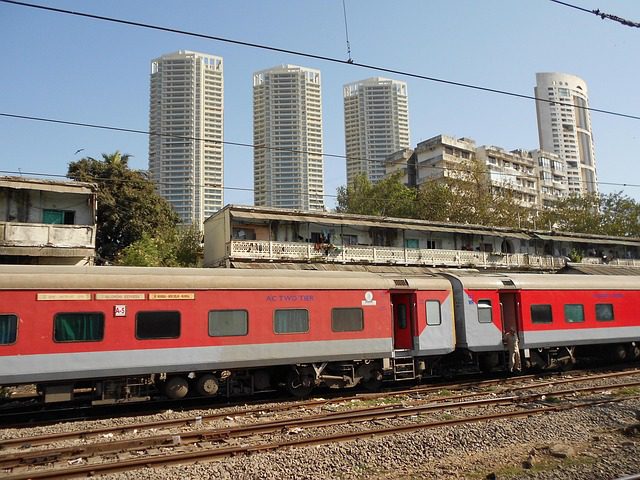
It’s Monday, 8:45 a.m. You’re standing on a crowded railway platform, running late. You know your local train is due, but you have no idea when it will actually arrive. Two minutes? Ten minutes? You check your phone, crane your neck towards the tracks, hoping to catch a glimpse of the approaching train, and wonder: How much longer will I have to wait? Now imagine that the train is only one part of your journey. You need to change at Dadar, catch another line, take the metro and then walk to work. Suddenly, knowing when that local train arrives is no longer a small inconvenience. It could determine whether you make your next connection, reach work on time or spend the next half hour recovering from a missed train. This is where India’s public transport revolution has a significant gap.
We are getting better at moving people, but we still need to get better at helping them navigate the journey. India is building public transport at an extraordinary pace. According to the Government of India’s Press Information Bureau (PIB), the country now has 1,155 km of operational metro network across 26 cities, carrying more than 1.15 crore passenger journeys every day. Alongside metros, millions rely on suburban trains, city buses, BRTS, monorails, RRTS and, in cities such as Mumbai and Kochi, water based transport.
We have more ways to move than ever before. But do we have enough visibility to move confidently between them? For commuters, these are not separate transport systems. They are different parts of the same journey. Someone travelling from Thane to Lower Parel may take a local train to Dadar, change services and then walk or take a bus. A commuter travelling from Borivali to BKC may combine a suburban train, metro and bus. The operator sees separate services. The commuter sees one journey. That distinction matters because disruptions rarely stay confined to one service. A ten minute delay can mean missing a connection at Dadar, which can mean missing the metro. Suddenly, ten minutes has become thirty.
There is also a psychological cost to that uncertainty. Waiting feels longer when you have no idea how long it will last. Knowing your train is six minutes away gives you a sense of control; not knowing whether it is six or twenty six minutes away leaves you guessing. A timetable tells you what is supposed to happen. Live information tells you what is happening now. If the train is six minutes away, you wait. If it is 25 minutes away, you consider another route. The real value is knowing what that change means for the journey ahead.
That is where multimodal mobility becomes important. Imagine travelling from Thane to CSMT and seeing the entire journey in one place: the approaching local train, its expected arrival, the connection at Dadar, the onward metro or service, estimated travel time and the final walk to your destination. If a delay makes the original connection unlikely, the journey plan could adapt and suggest another combination. That, to me, is what multimodal mobility should really look like. Commuters should not have to stitch together a train, metro, bus or monorail journey themselves. The system should connect each leg, show how they fit together and offer alternatives when plans change.
The technology to support this shift is increasingly available. GPS can provide live train and vehicle locations, while GTFS and GTFS Realtime can standardise schedules, routes and live movements across digital platforms. Delhi, for example, already publishes public transport data using GTFS and provides access to real time vehicle position data. The challenge now is making this information reliable and consistent across cities and operators. More vehicles need dependable location data, timetables need to stay digitally updated, and transport agencies need to share information. Most importantly, commuters need to receive it in a form they can understand within seconds.
Digital platforms such as Yatri are beginning to demonstrate what this can look like in practice. Its live local train tracking to show commuters where their train is on the network, while updates from railway control rooms provide visibility into operational changes and disruptions. Its multimodal journey planning experience brings together trains, buses, metro and monorail, allowing a journey such as Thane to CSMT to be viewed as one continuous trip rather than a series of separate legs.
India has built the tracks, trains, stations, stops and networks. Could real time information be the piece that completes India’s public transport puzzle, turning the 8:45 a.m. uncertainty of “When will my train arrive?” into a journey commuters can plan, navigate and trust?

The article has been written by Reeva Sakaria, Co-Founder, Yatri