As artificial intelligence accelerates innovation faster than any technology shift in human history, it is simultaneously introducing unprecedented operational friction. Enterprise leaders find themselves caught between explosive demands for rapid digital transformation and severe pressures on budgets, data governance, security, and the looming threat of architectural lock-in.
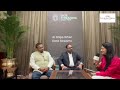
Addressing these mission-critical challenges during a recent media briefing in India along the sidelines of the SUSE Summit Mumbai 2026, open-source pioneer SUSE outlined its comprehensive Sovereign AI strategy. Backed by its 34-year enterprise open-source legacy, SUSE positioned open infrastructure not merely as a technical preference, but as the foundational imperative for Indian enterprises navigating the production chasm of generative and agentic artificial intelligence.
AI for Infrastructure and Infrastructure for AI
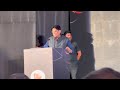
Opening the strategic briefing, Rhys Oxenham, VP and General Manager of AI, SUSE, emphasized that 2026 marks a watershed moment where AI has matured from isolated pilot projects and tinkering into industrialized “AI factories.” To further help organizations bridge the gap between AI experimentation and production scale, SUSE highlighted its comprehensive open source portfolio. Firstly, via SUSE AI Factory with NVIDIA: which features NVIDIA AI Enterprise inside SUSE’s secure governance layer, drastically reducing deployment timelines from months to days. This provides a practical foundation for Private Enterprise AI, helping with total data governance and strict adherence to digital sovereignty requirements. By keeping intelligence firmly within customer-controlled boundaries, it delivers a fast-track to value while establishing predictable, long-term cost control and ultimate deployment flexibility.
“The biggest thing that we need to recognize that in 2026, the reality we face is that AI is accelerating innovation faster than any technology shift in human history,” Oxenham stated. “But that rapid innovation brings rapid friction at the same time. It’s putting incredible pressure on governance, on security, and equal amounts of pressure on budgets, data privacy, and ultimately architectural lock-in.”
Oxenham noted that enterprises are continually held back by four distinct roadblocks:
- The Innovation Gap: The rapid pace of technological change where organizations fear choosing a framework that will immediately become obsolete.
- The Persona Gap: Bridging traditional platform engineers with data scientists and AI engineers who focus on fine-tuning and model lifecycles.
- The Location Gap: The need for consistent tooling whether deploying AI in core data centers, private clouds, or at the edge.
- The Operations Gap: Maintaining consistent logging, monitoring, and zero-trust security across all deployment footprints.
To solve these hurdles, SUSE approaches AI through two distinct lenses:
- AI for Infrastructure: Focused on the paradigm shift of agentic AI wherein autonomous AI-based applications interpret enterprise IT environments and act independently (such as executing automated CVE patching) while adhering to strict corporate policies. SUSE is proactively embedding Model Context Protocol (MCP) servers into its product portfolio to act as a “universal translator” between human operators, agents, and enterprise databases.
- Infrastructure for AI: Built on top of SUSE’s robust Linux and Kubernetes ecosystems, this tier provides a unified foundation for the deployment, lifecycle management, and governance of AI frameworks and hardware accelerators (GPUs from partners like NVIDIA and AMD). This powers what SUSE defines as Private Enterprise AI thus giving organizations total ownership, cost control, and sovereign operational independence.
Aligning with the India AI Mission and Open-Source Evolution
Highlighting India’s global leadership in this domain, Oxenham praised the India AI Mission as a visionary roadmap for national technology sovereignty and operational resilience: ”When we look globally at who is turning this kind of concept of digital sovereignty or operational resiliency into concrete action, I would really say that India is setting the benchmark. Furthermore, what we’re really seeing is that India is proving that sovereignty and scale can truly go hand in hand,” Oxenham noted.
Also read: Marshal Correia Appointed General Manager for India and South Asia at SUSE
Adding deep context to SUSE’s market approach in the region, Marshal Correia, General Manager for India and South Asia at SUSE, underscored the foundational role of open source and why enterprise software must deliver absolute flexibility without forced bias. Elaborating on the unique engineering assurance SUSE brings to upstream community work, Correia noted: “We are, truly open source with enterprise confidence. What it means is we work with upstream and get the product curated, offer long roadmap like any enterprise software, give fixes and support. And what it leads to because open source naturally leads to continuous innovation. It gives the true choice, and that’s very important. We are not opinionated or it’s not proprietary. So, that really gives flexibility and choice.”
Strategy to Convince CIOs Against Hyper-Scale Lock-In
During the interactive session, a pressing media question was raised regarding market realities: As organizations graduate from basic generative AI to autonomous agentic workflows, hyperscalers are aggressively packaging closed ecosystems and proprietary AI pipelines. How does SUSE plan to convince enterprise CIOs in India that an open-source, vendor-neutral infrastructure can outperform what hyperscalers have to offer?
- Mitigating Cost Pressures and Access Control Risks
Rhys Oxenham answered by emphasizing that relying on proprietary implementations leaves enterprises vulnerable to two core traps: uncontrolled cost inflation and geopolitical/jurisdictional access restrictions: ”If as an organization you’re building against proprietary implementations, you’re inherently becoming much more locked into that implementation. And you subject yourself to two core problems. First of all, cost pressure, and secondly is access control. As we saw in a number of different events over the last few months, certain models were restricted for certain jurisdictions,” Oxenham warned. “I think it really comes down to making sure that you’re building an implementation that’s fundamentally centered around having choice.” - The Rapid Rise and Power of Open-Weight Models
Addressing the performance gap often touted by closed ecosystem providers, Oxenham pointed out that the capabilities of modern open-weight models are closing the gap with frontier proprietary models at an extraordinary pace: ”Don’t underestimate the power of open source and community, I should really say. In these worlds, you both get access to incredible amounts of innovation. But it’s also your route to avoiding vendor lock-in and ultimately having the pivotability and the operational resiliency,” Oxenham emphasized. “Some of the latest open weight models are, you know, when they’re benchmarked even against the latest frontier models, their capabilities are absolutely incredible.” - Navigating IT Realities, Security, and Budget Realities
Marshal Correia expanded on the specific bottlenecks Indian CIOs face, and said balancing legacy infrastructure alongside cloud-native modern workloads while combating supply-demand and skills gaps: “One is CIOs are under pressure to innovate using AI. For productivity benefits, for innovation. So, on one hand, they need to invest in that AI gear. At the same time, they aren’t getting any additional budget. So, they need to save and optimize the current IT to actually find that,” Correia noted.
Addressing the mechanics of deployment and security risks, Correia added: “The other part is the security threats. I mean, this is a big challenge. And what we offer is zero trust for AI and containers. So, nowadays, supply chain is important. Also, vendor lock-in. This is a big thing which is bothering many of the clients. Because what happened in the industry, the escalating cost, etc. So, when clients choose for open source infrastructure, they have a choice. And we also have an offering for a multi-Linux support and management. So that also helps.”
SUSE kicked off its flagship SUSE Summit Mumbai 2026 under the theme Shape Your Resilient Future. At the event, SUSE unveiled its strategic roadmap to help Indian enterprises navigate rapid digital transformation, comply with evolving national data policies, and scale AI workloads with complete architectural freedom.