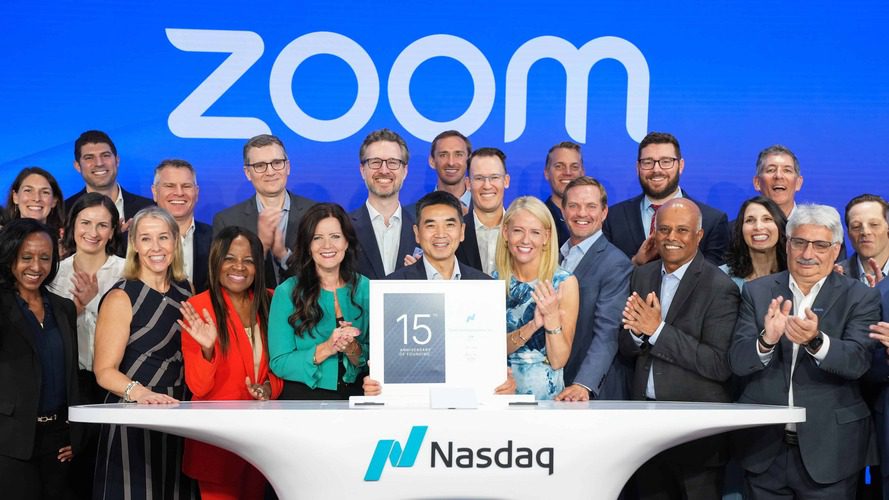
As Zoom marked its 15th anniversary by ringing the Nasdaq opening bell, Founder and CEO Eric Yuan outlined his vision for the future of work, saying artificial intelligence (AI) will fundamentally reshape workplace collaboration by reducing routine tasks and allowing people to focus on creativity, strategy and decision-making. In a blog post reflecting on Zoom’s journey since its founding in 2011, Yuan said AI’s role will extend beyond automation to transforming how work is completed. According to him, the next phase of AI adoption will be defined by stronger human collaboration, customer-centric innovation and trust-driven workplace cultures.
Also read: Arijit Dey Appointed Channel Leader for India & SAARC at Zoom
Recalling Zoom’s early days, Yuan said the company began with a simple mission of “delivering happiness”. He shared that the idea for Zoom was shaped by his experiences at WebEx, where he witnessed the challenges users faced in connecting effectively, and by his belief that customer feedback should remain central to product development. Looking ahead, Yuan said AI would increasingly remove friction from everyday work by converting conversations into actionable outcomes. He noted that AI-powered tools capable of capturing discussions, summarising meetings and executing follow-up tasks would reduce the time employees spend on coordination and administrative work.
“The next decade won’t be about working more; it will be about accomplishing more,” Yuan said. “The real revolution isn’t about speed. It’s about clarity. When work flows naturally from what we say and decide, we’ll finally spend our time on what matters most.” He added that meetings are also expected to evolve significantly. According to Yuan, AI will provide meeting context, generate follow-up actions and eliminate routine note-taking, making discussions more focused and outcome-oriented.
Also read: Zoom Security Upgrade Explained: What is Post-Quantum Encryption?
“The meeting where nothing gets decided will become increasingly rare. AI will help ensure every meeting has purpose, context and follow-up. The best meetings will feel lighter, faster and more human because everyone will be more present while AI handles the busy work,” he said. Yuan believes coordination tasks such as scheduling, note-taking and follow-up communication will become largely automated, allowing employees to devote more time to activities requiring judgement, empathy and innovation.
“The real value will come from human insight, connection and empathy, things machines can’t replicate. Imagine a world where your ideas move forward while you sleep because of the context you’ve given your AI tools, while your own energy goes toward solving problems instead of managing them,” he wrote. Discussing Zoom’s AI roadmap, Yuan said the company’s focus is on connecting communication directly with execution. “For 15 years, Zoom has hosted the conversations that matter most to organisations. Now, with AI, we’re closing the gap between what gets discussed and what actually gets done,” he said, adding that meetings, chats and emails will increasingly translate into completed work without requiring multiple manual follow-ups.
Addressing concerns over AI replacing jobs, Yuan said he expects AI to enhance human capabilities rather than substitute them. “There’s a big fear that AI is coming to take your job. I believe the most powerful AI won’t replace people. It will help them work together better across time zones, languages and organisations, while also enabling major advances in healthcare. The magic happens when technology fades into the background and humans become the focus,” he noted. Yuan also argued that future business success will depend on designing products around customer needs rather than internal processes. “For too long, customers have had to adapt to companies’ internal systems. The organisations that start with care and design everything through the eyes of their customers will create simpler experiences, and simplicity often wins,” he said.
On collaboration, Yuan emphasised that AI should strengthen relationships instead of replacing human interaction. “The most successful companies will use AI to put human collaboration front and centre. Technology should make people more connected, not more isolated. It should help us listen better, understand faster and act with greater empathy,” he wrote. Beyond workplace productivity, Yuan said AI’s biggest breakthroughs could come from solving real-world challenges in sectors such as healthcare and biotechnology, potentially accelerating research into diseases including cancer, Parkinson’s disease and dementia.
He also reiterated his long-held support for hybrid work, describing it as the new baseline rather than a temporary trend. “Flexibility is now a core expectation, and companies that resist it risk losing great talent. The future belongs to organisations that measure outcomes, not office hours,” Yuan said. Yuan further suggested that AI-driven productivity gains could eventually make a four-day work week commercially viable. “AI is quietly eliminating coordination overhead, scheduling back-and-forth and routine status updates that consume valuable time without creating meaningful outcomes. When that friction disappears, the case for a shorter work week becomes practical rather than idealistic,” he said.
Concluding his reflections, Yuan identified organisational culture as the defining factor for long-term success. “Care is the ultimate competitive advantage. Retention, innovation and customer loyalty all come down to one thing: do your people genuinely care? Care isn’t a soft value; it’s a business strategy. It’s what turns good companies into enduring companies,” he said. As Zoom enters its next phase of growth, Yuan said the company’s approach to AI will continue to focus on making work simpler, more collaborative and more human, while maintaining customer trust and listening closely to user needs.