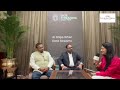
At a virtual media briefing hosted live from the Red Hat Summit 2026 in Atlanta, senior Asia Pacific leadership from Red Hat shared insights into the company’s strategy to strengthen its role in enterprise AI, sovereign cloud, automation and hybrid cloud infrastructure through a series of major announcements unveiled during the summit. The media interaction featured Daniel Aw, General Manager and Vice President, Red Hat APAC, Vincent Caldeira, Field CTO, Red Hat APAC and Fytos Charalambides, Fytos Charalambides. Head of Tech Sales, Red Hat APAC who spoke extensively about how enterprises across Asia Pacific are accelerating investments in open source AI infrastructure and cloud-native platforms.
Also read: Automation as Strategy, Not Afterthought, in the AI Era – Sathish Balakrishnan, Red Hat
Daniel Aw, who recently took over as General Manager and Vice President for APAC, said the company is entering one of the most important phases in its history as artificial intelligence reshapes enterprise technology priorities globally. “I’ve been leading the enterprise business, which constitutes the largest customers that Red Hat has. That business constitutes more than 60 per cent of Asia Pacific business and we’ve been growing in strong double-digit growth over the last 15 quarters,” said Aw.
“I’m really humbled that at the start of the year I was given this opportunity, and I’m excited at the same time to lead Red Hat into the AI era.” Aw described the current AI wave as the third major technology transition driven by open source innovation. “The first time we saw this was the Linux moment in the early 2000s, where Linux democratised operating systems and applications across different brands of servers and drove the x86 movement,” he said. “The second big shift was in the late 2010s with the cloud-native era, where Kubernetes and open source again played a very major role. Red Hat brought community open source into the enterprise through OpenShift.”
Also read: Fixing the Foundations of Enterprise IT – Mangesh Surve, Red Hat
“And now we are entering into the AI era where we believe open source will again play a very major role to drive rapid innovation in how AI transforms the way we work, live and the way businesses operate.” According to Aw, Red Hat intends to position itself as the bridge between fast-moving open source AI innovation and enterprise-grade deployment requirements. “Red Hat plays a very big role again in this era to bring the rapid innovation of open source into the enterprise. So this is a really exciting time for us,” he added.
APAC emerges as a strategic AI market
Aw also highlighted the growing strategic importance of Asia Pacific, which he described as a high-growth but highly diverse region. “As I took on the role, I organised Asia Pacific and Japan into six regions. We used to have five regions, but now I’ve created an additional region by making Korea independent as a market and reporting directly into Asia Pacific and Japan,” he said. The six operating regions now include Japan, Greater China, Australia and New Zealand, India, ASEAN and Korea.
“All six markets give us a strong opportunity to drive the innovation of open source and provide our customers with great innovation that comes from open source,” Aw noted. Among the summit announcements, Aw said he was especially excited about the launch of “RHEL Forever”, an extended lifecycle support programme for Red Hat Enterprise Linux.
“We’ve launched something called RHEL Forever, where we have extended our lifecycle from 10 years to 14 years, and for customers who want applications that they do not want to change, we are going to support those Linux requirements until customers decide to end-of-life their applications,” he explained. “That’s really exciting because in Asia Pacific we do have countries that have legacy systems they want to keep running and not modernise.” At the same time, Aw said Red Hat is also accelerating Linux innovation for AI-driven environments requiring rapid security and feature updates. “There was also a really exciting announcement around Red Hat AI, where we are moving towards agents and how we bring agents safely into enterprise architecture and enterprise IT environments,” he said.
Red Hat expands AI lifecycle management capabilities
Vincent Caldeira said the summit strongly reinforced Red Hat’s belief that AI is becoming the next enterprise computing platform. “The way the summit started was really Matt Hicks, our CEO, explaining how AI is really the new platform from our perspective, as well as a new opportunity,” Caldeira said.
He explained that Red Hat is now focusing on enabling enterprises to manage the complete AI lifecycle, from infrastructure and data management to inference, governance and agentic AI. “A lot of enterprise value is derived not just from relying on a powerful AI model, but really embedding enterprise data into the process of the model and the application,” he said.
“The value you build is really dependent on your business ability to curate and integrate important business data across the entire application, particularly AI functions.” To simplify enterprise AI deployments, Red Hat introduced new AutoRAG capabilities designed to automate data discovery, vector storage and retrieval testing for retrieval augmented generation workflows. “RAG is not new, but it can be a frustrating process,” Caldeira admitted.
“So we are providing improvements for customers to easily discover and embed their data for information retrieval by AI models and agents, and test the accuracy of the retrieval in an automated manner.” Red Hat also unveiled “Evaluation Hub”, a unified control plane for evaluating AI systems and model performance. “What we’ve heard from a lot of enterprises is that it’s very difficult to know at what point your AI system is good enough to get to production,” Caldeira said.
“The key challenge here is evaluation, how do you score the accuracy and stability of AI system outputs over time?” According to Caldeira, Evaluation Hub integrates widely used open-source evaluation frameworks directly into Red Hat’s AI platform. “They are open source frameworks, but they are typically extremely hard to integrate into an AI supply chain end-to-end. We are making them part of the AI platform as a whole.”
Model-as-a-Service and inference optimisation take centre stage
Caldeira said inference optimisation is becoming increasingly important as enterprises scale AI deployments. “One of the recent innovations is speculative decoding, where we use a very small model to predict what the more expensive model will deliver in terms of token production,” he explained. “That is the way you can heavily reduce the cost of inference at enterprise scale.”
A key summit announcement was Red Hat’s new Model-as-a-Service capability. “A lot of enterprises don’t really want to deal with GPUs. They don’t even want to deal with deploying the model and managing its efficiency,” Caldeira said. “They just want to provide an endpoint or an API to their developers. This is a way to consume AI that is extremely friendly for teams that just want to build AI applications.”
AI governance and agentic AI become enterprise priorities
Caldeira also stressed that governance and security are now emerging as critical enterprise AI concerns. “We understand those are probably the biggest challenges to bring AI into production right now, probably beyond cost, to be honest,” he said. “Until you can scale production workloads, you actually need them to be safe and governed first.”
To address this, Red Hat announced integration of the open-source project MLflow into its AI stack. “MLflow provides experiment management, model registries and the ability to understand the source of your model and how performance is measured over time,” Caldeira explained. The company also announced automated red teaming capabilities based on NVIDIA Garak integrations. On the topic of agentic AI, Caldeira said enterprises are looking for AI agents that can act autonomously while remaining observable and compliant.
“There’s a lot of technology out there that you can use to easily build agents. However, in the enterprise context, the big challenge is making sure the agent performs actions within the limits enterprises want to provide,” he said. “We announced and demoed capabilities around agent identity management and how we can trace exactly every action agents are taking, from model calling to tool calling, and build explainability into agentic decisions.”
NVIDIA partnership deepens around enterprise AI factories
Caldeira also highlighted Red Hat’s expanding collaboration with NVIDIA. “We have an extensive collaboration with NVIDIA now around providing AI factory blueprints for enterprise customers,” he said. “So if you need to run AI in a controlled manner within private infrastructure, you can do this with our AI factory blueprint in partnership with NVIDIA.”
The partnership also includes Day Zero support for NVIDIA’s upcoming GPU architectures, including Blackwell and Vera Rubin. “We’ve become an approved ISV for the NVIDIA Cloud Partner Program, meaning we can provide a full AI factory blueprint to sovereign and neo-cloud providers,” Caldeira added.
OpenShift growth accelerates as virtualisation demand rises
Fytos Charalambides said Asia Pacific customers are increasingly contributing to innovation across Red Hat’s ecosystem. “Ten years ago APAC was trying to catch North America in terms of innovation. I would say APAC now is probably leading in some parts and is seeing bursts of innovation across countries in the region,” he said. “I was immensely proud sitting in the audience this week seeing our customers and developers contributing directly to many of these updates.”
Charalambides highlighted a new Fedora Hummingbird Linux-based capability designed to deliver zero CVE updates to RHEL environments within 24 hours. “It’s designed to provide customers with patches and updates within 24 hours using AI tooling,” he explained. “That’s for customers who want to move really, really fast.” At the same time, Red Hat is continuing to support customers prioritising stability and long-term support. “We know of workloads in the cloud, on the edge and even in military environments that rely on stable Linux platforms and want extended maintenance support,” he said.
On hybrid cloud infrastructure, Charalambides revealed that Red Hat OpenShift has now become a US$2 billion annual recurring revenue business. “There are only a handful of businesses globally that can actually call out US$2 billion in ARR revenue,” he said. “Most notably, virtualisation is driving growth. We’ve seen 417 per cent VM growth through OpenShift.” He also pointed to expanded OpenShift availability across IBM Cloud and Google Cloud alongside new AI workload and bare-metal service capabilities.
Automation and sovereign cloud gain momentum
On automation, Charalambides said enterprises are increasingly seeking unified platforms capable of supporting traditional automation and AI-driven workflows simultaneously. “We’ve identified three types of use cases for automation customers, task-based, event-driven and now artificial intelligence,” he said. “There’s support for MCP servers, agentic workloads and having a single control plane within Ansible to manage all three.”
According to Charalambides, sovereign cloud requirements are also rapidly emerging across the APAC market. “We have the ability to deploy sovereign environments according to industry or country regulations,” he said. “We’ve started with European Union requirements, and APAC requirements are already on the roadmap.” He added that Red Hat is continuing to invest in security hardening, telemetry and policy controls to support sovereign cloud deployments globally. The company also showcased several APAC customers and partners adopting Red Hat AI, virtualisation and sovereign cloud technologies, including organisations from Australia, Japan and Southeast Asia.