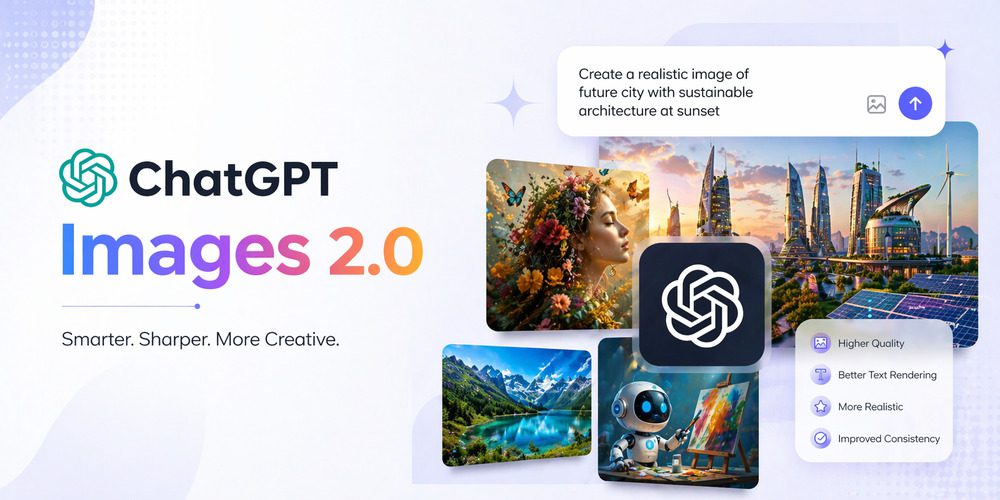
ChatGPT Images 2.0 is now being rolled out for users, and the latest update is available for ChatGPT, Codex, and the API. The new update aims at making image generation more usable for real work, and not just visual experimentation, says OpenAI. Unlike previous versions, the latest version is being appreciated by users for its ability to follow detailed instructions, render dense text, place objects accurately as well as handle a wider range of aspect ratios. In addition to these capabilities, ChatGPT Images 2.0 can also generate images across multiple languages.
Also read: OpenAI Launches Faster, Cost-Effective GPT-5.4 Mini and Nano Models for Everyday AI Tasks
Noteworthy Updates Under ChatGPT Images 2.0
ChatGPT Images 2.0 has been launched for all ChatGPT and Codex users. Advanced image outputs powered by “Thinking” will be accessible to Plus, Pro, Business, and Enterprise subscribers. The core model, GPT-Image-2, is also now available via the API. Some of the notes;e updates users will be able to access are as follows:
- Delivers more precise image generation, especially for complex creative requirements such as small text, UI elements, diagrams, and dense layouts.
- Supports a wide range of aspect ratios from 3:1 to 1:3, enabling easier creation of assets for banners, presentations, posters, and mobile formats.
- Introduces thinking-enabled image workflows within ChatGPT, allowing the system to reason through prompts, leverage web inputs where relevant, and generate multiple distinct outputs.
- Allows up to eight consistent outputs in a single request, supporting use cases such as poster series, storyboards, manga-style pages, and multi-format campaigns.
- Available via API through GPT-Image-2, enabling developers to integrate image generation and editing capabilities directly into applications and workflows.
“With both the intelligence of OpenAl’s reasoning models and a vast understanding of the visual world, this model moves image generation from rendering to strategic design, from a tool to a visual system, helping people turn ideas into outputs they can understand, share, teach with, and build from,” says a statement from OpenAI.