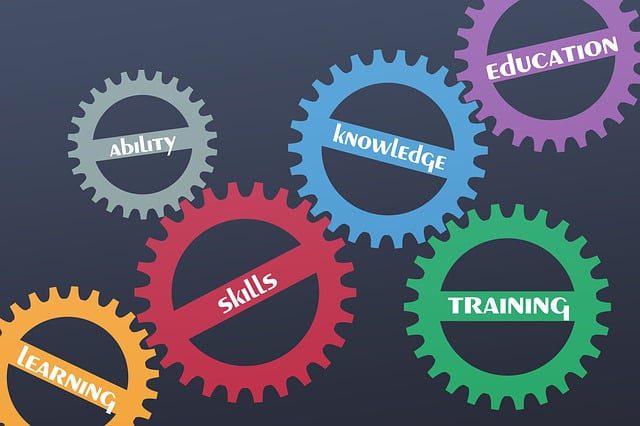
As the world of work continues to be reshaped by artificial intelligence, digital transformation and emerging technologies, industry and academic leaders are calling for a broader approach to skill development that goes beyond technical expertise. On the occasion of “World Youth Skills Day”, leaders across technology, education, telecommunications, manufacturing and digital services emphasised the need for continuous learning, adaptability, creativity and industry-aligned training to prepare young professionals for the future.
According to Chetan Jain, Managing Director, Inspira Enterprise, the rapidly evolving digital economy demands a diverse mix of capabilities: “As the job market globally continues to evolve in this digital era, it is critical for the young minds of today to develop multiple skill sets to remain competitive. On World Youth Skills Day, we celebrate the power of young individuals to build a brighter future for themselves and their communities. To help them thrive, technical skills, although crucial and industry-specific, are no longer adequate. These skills should be combined with digital skills, behavioural skills, critical thinking, collaboration, adaptability, and ethical decision-making to succeed faster both personally and professionally. At Inspira Enterprise, we believe in investing in future-ready digital skills and continuous learning while navigating the digital world. Critical thinking and Problem-solving skills, along with adaptability, flexibility, and emotional intelligence, are equally important. Youth will then be empowered to innovate with confidence and have a strong sense of responsibility to bring about meaningful transformation. Establishing a shared future is dependent on how well our young minds are empowered with relevant skills to address tomorrow’s challenges.”
Echoing similar views, Dr. B.K. Chakravarty, Dean, School of Design Innovation, Mahindra University, stressed that employability alone should not be the goal of education: “Skills for a Shared Future’ goes beyond preparing students for their first job; it is about equipping them to address challenges that have yet to emerge. Technological competence with creativity, empathy, critical thinking, sustainability and an entrepreneurial mindset must be combined by graduates to make them future-ready. A new model making strong industry partnerships, experiential learning, interdisciplinary collaboration the norm is vital. Continuous learning and adaptability will be the defining skills of the future as digital transformation reshapes every sector. At Mahindra University’s School of Design Innovation, we believe education must integrate academic rigour with real projects from industry, enabling students not only to succeed in a rapidly evolving global workforce but also to become innovators and responsible leaders who create meaningful impact for society.”
Industry leaders also highlighted the importance of building sustainable talent pipelines. Bhagwati Chhabbarwal Shetty, CHRO, Comviva, said organisations must move beyond conventional talent development frameworks: The rapidly evolving digital landscape demands that we move beyond legacy, template-driven talent frameworks towards ecosystem-wide skill integration. We believe the focus now must be on equipping young talent to play on a world stage by building future-ready capabilities while moving beyond template careers to thrive in cross-functional innovation environments. At Comviva, we are translating this philosophy into action by building sustainable talent pipelines through stronger industry-academia engagement. We hire extensively from leading institutions, including IITs, NITs, IIITs and other premier universities, bringing in talented young professionals who contribute across high-impact areas such as AI, data science, fintech and digital engineering. Through curated learning journeys and a culture of continuous skill reboot, we enable them to build future-ready capabilities, earn mobility with merit, collaborate across disciplines and solve for billions. The goal is not just to help the next generation adapt to technological change, but to empower them to shape the future of digital transformation.”
Highlighting the role of emerging technologies, Agendra Kumar, Managing Director, Esri India, said geospatial technologies, AI and machine learning will play a critical role in shaping future careers: “Youth drive national development by acting as the primary engines of economic growth, technological innovation, and social change. To be able to create maximum impact, they need strong technical knowledge and skills in advanced technologies like GIS, AI, and machine learning. At Esri India, we are committed to empowering youth with industry-relevant knowledge, hands-on experience, and future-ready skills in geospatial and emerging technologies. Through initiatives like the GIS Academia Council of India (GACI), we bring academia and industry together to strengthen GIS education, shape industry-aligned curricula, and foster interdisciplinary learning, enabling students to develop innovative GIS- and AI-enabled solutions for governance, business, and sustainable development. We believe that investing in these capabilities today will enable India’s youth to build a more resilient, inclusive, and shared future.”
The discussion around skilling also extended to employability and inclusion. Manisha Dubey, Head of IDEMIA India Foundation, pointed out that the effectiveness of skilling initiatives should be measured through employment outcomes: “On World Youth Skills Day, we must redefine how we measure the success of skilling initiatives. The true metric is not how many young people we train, but how many we empower with meaningful employment. Skills must translate into livelihoods, confidence, and long-term careers. At IDEMIA India Foundation, we are proud that 92% of the youth graduating from our employability programs have secured jobs. This reinforces our belief that industry-aligned, outcome-driven training can create lasting social impact. Equally important is ensuring that no one is left behind. Our inclusive skilling programs for hearing-impaired youth and young adults on the autism spectrum are helping unlock talent that is often overlooked. Every young person deserves the opportunity to build a future with dignity and purpose. The future of skilling lies in continuously upgrading curricula, embracing emerging technologies, strengthening industry partnerships, and providing real-world exposure that prepares young people for evolving workplaces. Investing in quality, relevance, and inclusion is the key to building a workforce that is ready for tomorrow and an economy that leaves no talent behind.”
Similarly, Navneet Kaushik, CHRO, Invenia-STL Networks, underlined the importance of adaptability and practical learning: “World Youth Skills Day is a reminder that skills are the bridge between potential and opportunity. As industries evolve and technology reshapes how we work, the ability to learn, unlearn, and adapt matters more than any single qualification. At Invenia-STL Networks, we have worked with our partner to rebuild a science lab from the ground up at a government school in Jammu and trained teachers on AI-assisted teaching tools. Real skilling means giving people the infrastructure and the confidence to solve problems with their own hands, not just theory on a page. When we invest in young people’s skills, we’re not just preparing them for jobs of the future; we’re building more inclusive economies, stronger communities, and a generation capable of leading meaningful change. This is a responsibility every industry, institution, and individual must share.”
As India strengthens its position in advanced technologies, Gautam Sharma, Managing Director, Viasat India, highlighted the growing need for specialised skills in satellite communications and space technologies: “As India cements its position as a global hub for space technology and digital innovation, empowering young people with future-ready skills is no longer just an educational priority, it is an economic imperative. Satellite communications is emerging as a foundational technology for the future, enabling resilient connectivity across aviation, maritime, disaster response, remote communities, defence, IoT and the broader digital economy. Realizing this opportunity requires a workforce equipped with specialized, industry-relevant skills.”
He added that partnerships with educational institutions and initiatives such as specialised satellite communications courses, the ‘Space for Good’ challenge and an upcoming Centre of Excellence focused on IoT and UAV innovations are helping bridge the gap between academic learning and industry requirements.
Meanwhile, Dr. Sanjay Gupta, Vice Chancellor, World University of Design, argued that future success will increasingly depend on uniquely human capabilities: “World Youth Skills Day is a reminder that the most valuable skills of the future will not simply be technical. They will be deeply human. As artificial intelligence automates routine tasks and even augments specialised knowledge, the real differentiators will be creativity, critical thinking, empathy, ethical judgement and the ability to solve complex problems across disciplines.” He added that education must equip students not only for existing careers but also to create new opportunities and drive innovation.
Addressing the manufacturing sector, Diwakar Mehrotra, Vice President – Group AR, Europe & Africa, NIPSEA Group I Nippon Paint, highlighted the growing shortage of skilled technicians in India’s automotive aftermarket industry: “India’s automotive aftermarket sector is evolving faster with technological advancement and colour innovations in car manufacturing than our talent pipeline can keep pace with. We’re manufacturing more, and producing cars with advanced and vibrant hues, finishes and textures, but the country still faces a real shortage of trained paint and colour technicians.” He noted that through “Project Rangshala”, Nippon Paint India is training underserved youth in practical application techniques, colour matching, digital tool usage and workplace readiness.